


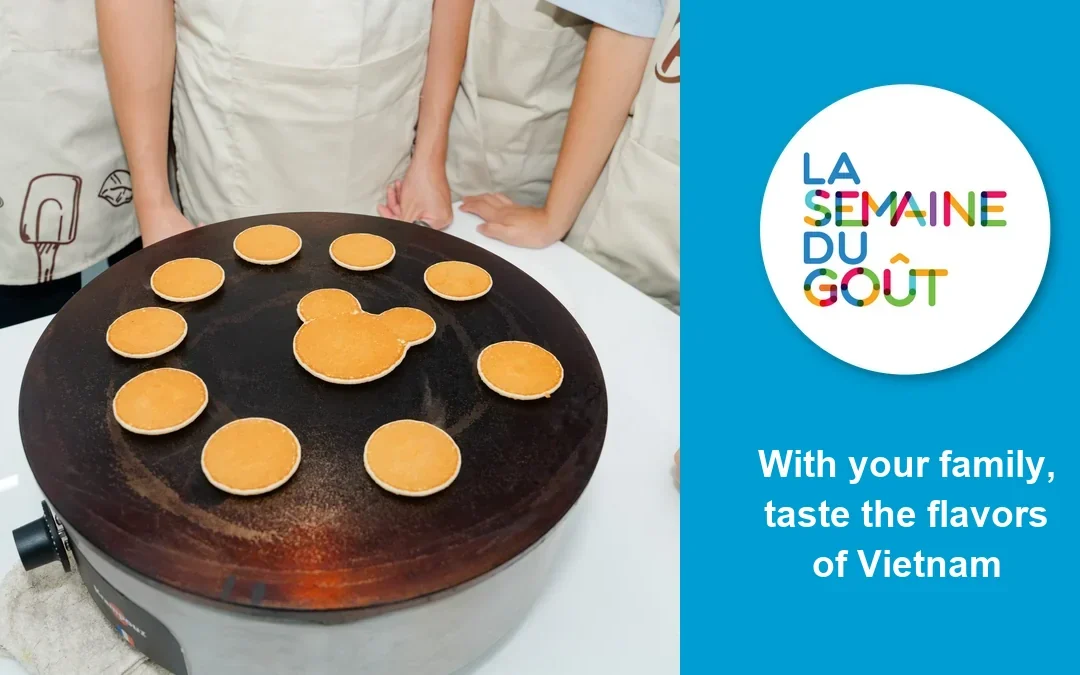
This week, in France, 10,000 classes are welcoming a chef, a baker or a farmer who comes to let the children taste what they produce. This is France’s national Taste Week, the Semaine du goût (press kit in French), from October 12 to 18, 2026, and every French school has celebrated it since 1990.
In France, a whole week is set aside to help children discover flavors. Here, all it takes is stepping into the market. Your child is growing up in a country whose entire cuisine rests on the balance of flavors, surrounded by fruits, herbs and dishes that their cousins abroad only know from photos.
Schools don’t celebrate it just for fun. France’s Education Code makes food education part of every school (Article L. 312-17-3), and the French Ministry of National Education’s guide (in French) points out that it “falls first and foremost to the family.” You are your child’s first taste teacher: here are five days to celebrate the Semaine du goût at home, with the flavors of Vietnam, and what each game teaches your child.
Five flavors in France, five vị in Vietnam
At French school, children learn sweet, salty, sour and bitter, then a fifth flavor, umami. Vietnamese cuisine, for its part, is built on the ngũ vị: chua, sour; cay, spicy; mặn, salty; ngọt, sweet; đắng, bitter. A successful dish balances them instead of letting one take over, and tradition adds five colors: white, green, yellow, red and black.
Four flavors are shared. The fifth makes a great question to ask your child: the French list has umami, the Vietnamese list has spicy. Scientists don’t count spiciness as a flavor, it’s a burning sensation; and umami is in every Vietnamese meal, in nước mắm.
Sources: Sài Gòn Giải Phóng (in Vietnamese) and Tatler Asia.
Five days, five flavors
Each day: one flavor, a food from here, a food from home, a game, and a word in Vietnamese with its French translation. Ten minutes at snack time or dinner is enough, and you can pick any week you like. It also makes it a week of French vocabulary at home, even if no one in the family speaks French.
Just one rule: invite, never force. Anses (in French), the French food safety agency, recommends that parents “don’t force the child to eat, but set an example.” You taste first.
Monday: sweet
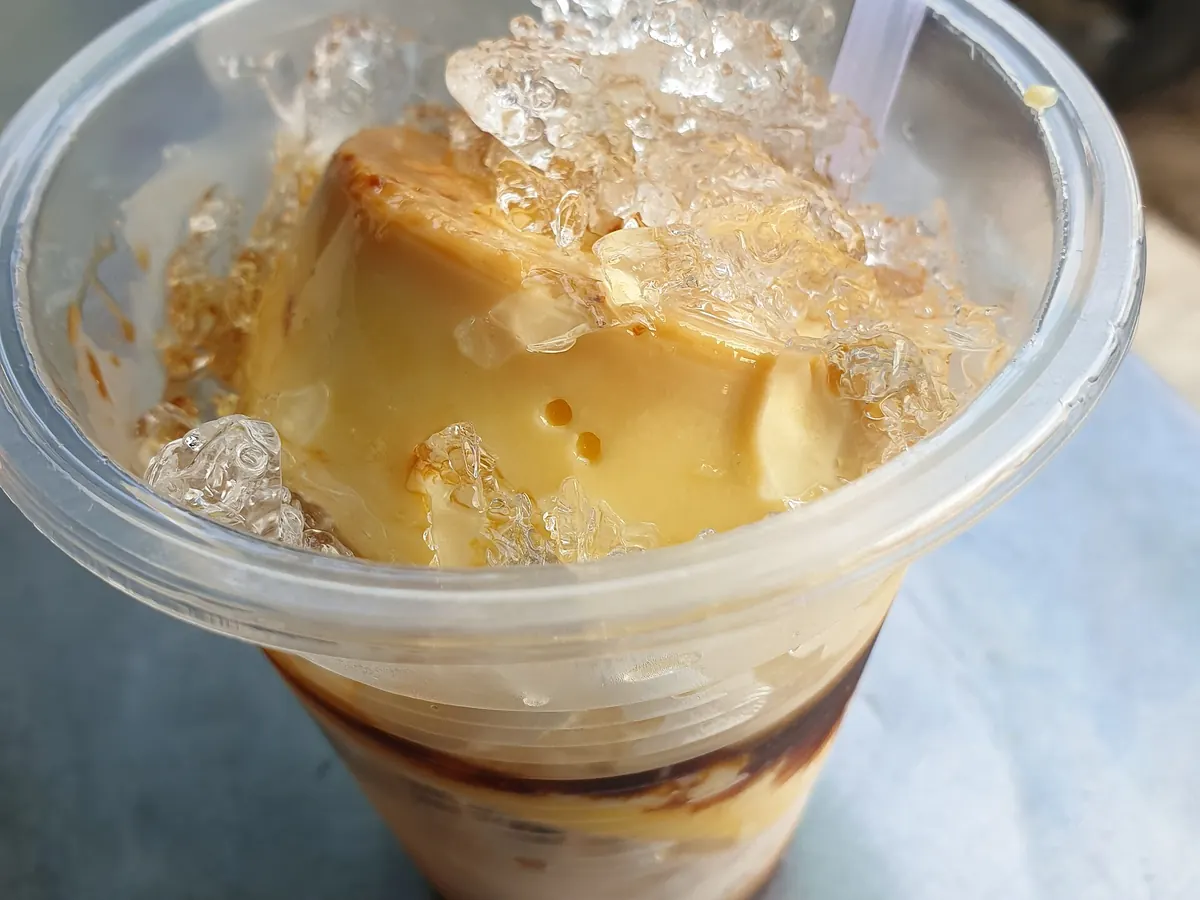
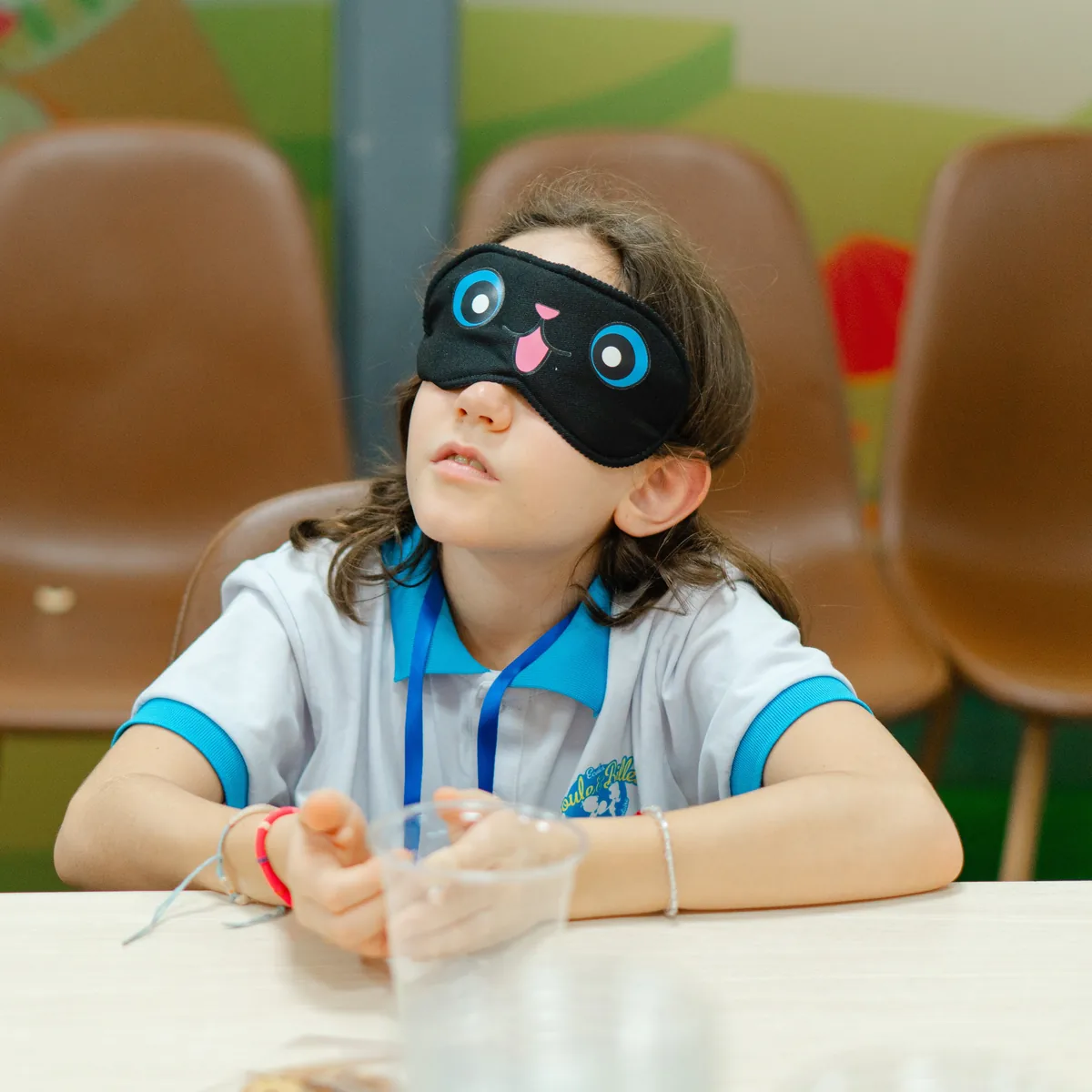
A slice of ripe mango, a glass of sugarcane juice pressed right in front of you on the street corner, and next to them a sweet food from home: honey, jam, applesauce. The game: blindfolded, rank the three from least sweet to sweetest. For dessert, a bánh flan, the French crème caramel that Vietnam adopted, steamed and sometimes served over crushed ice with a splash of coffee.
What it teaches your child: to compare. Blind tasting is the great classroom classic during the Semaine du goût: without their eyes, children can only rely on their tongue.
Word of the day: ngọt — and in French, sucré.
Tuesday: sour
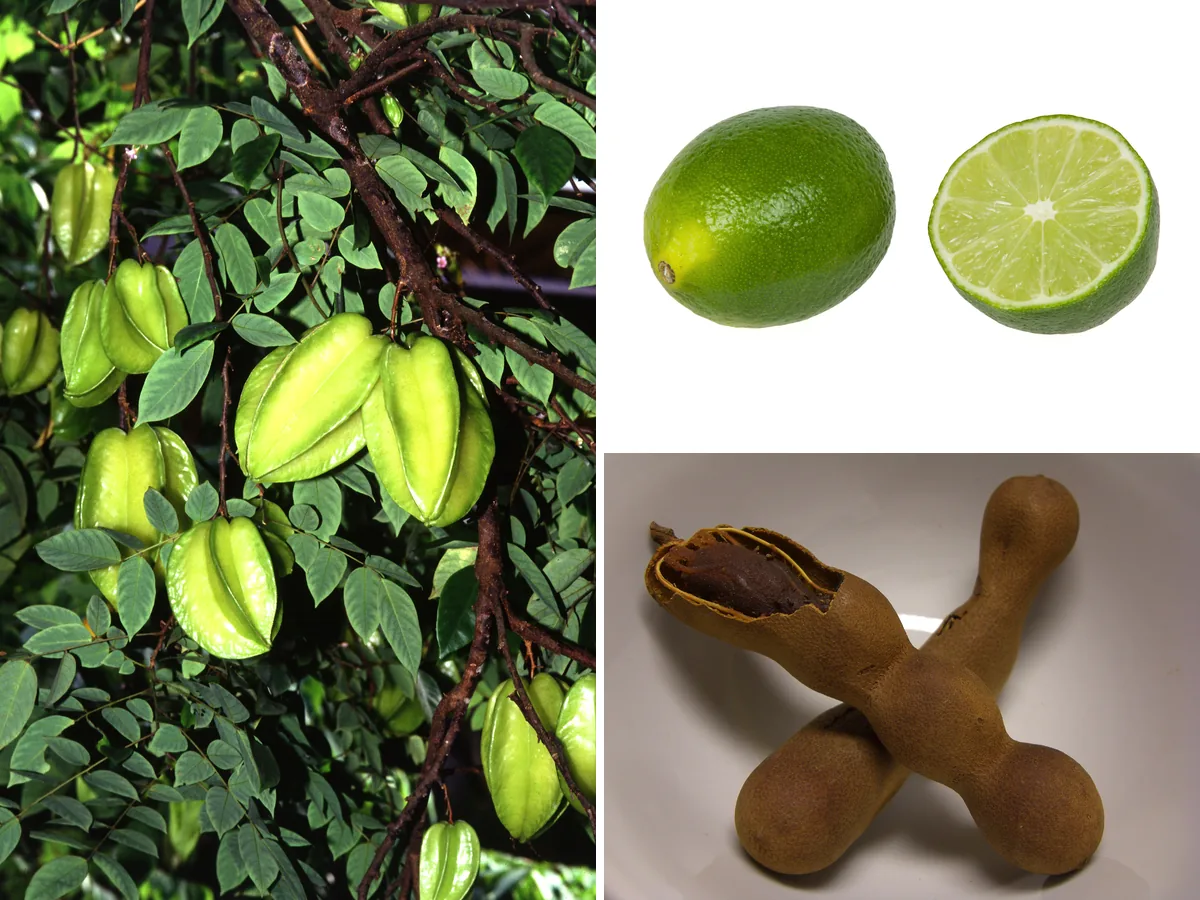
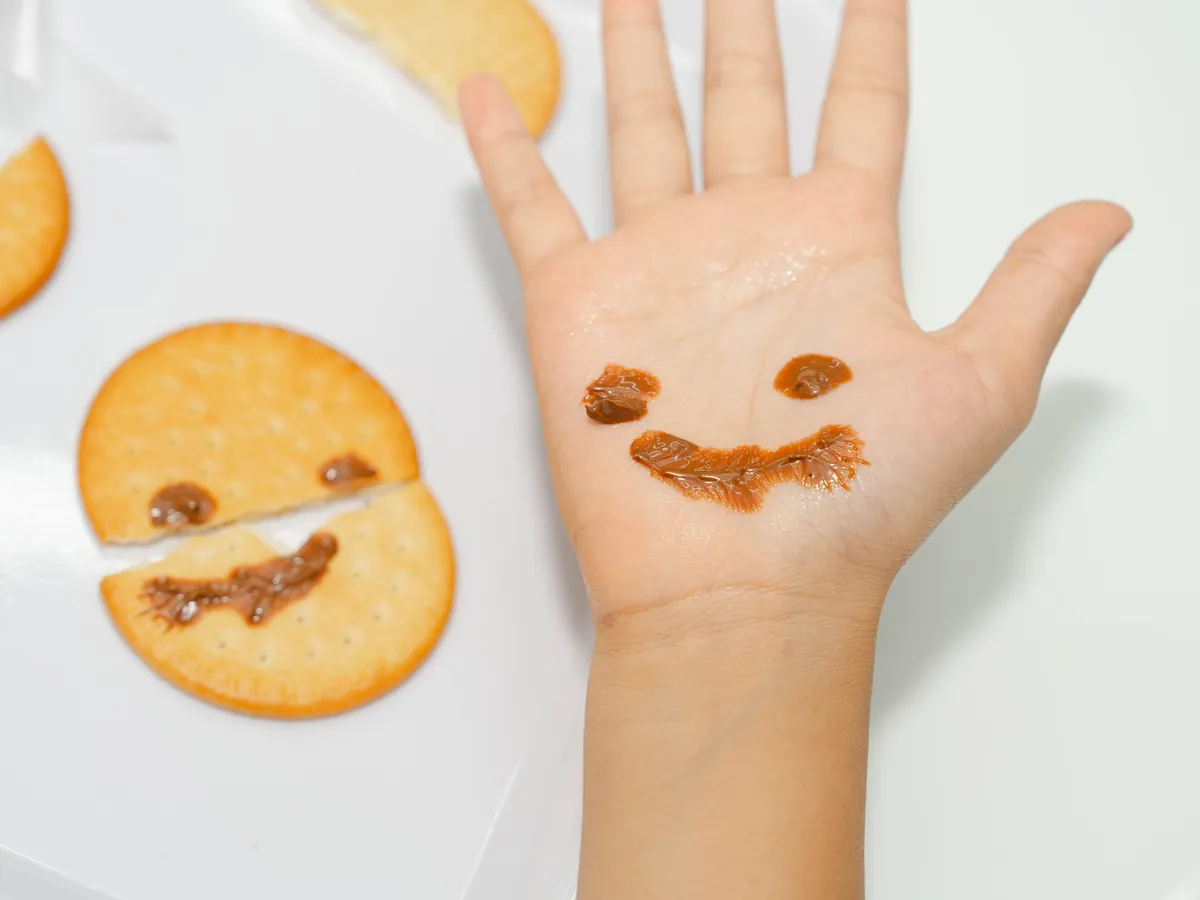
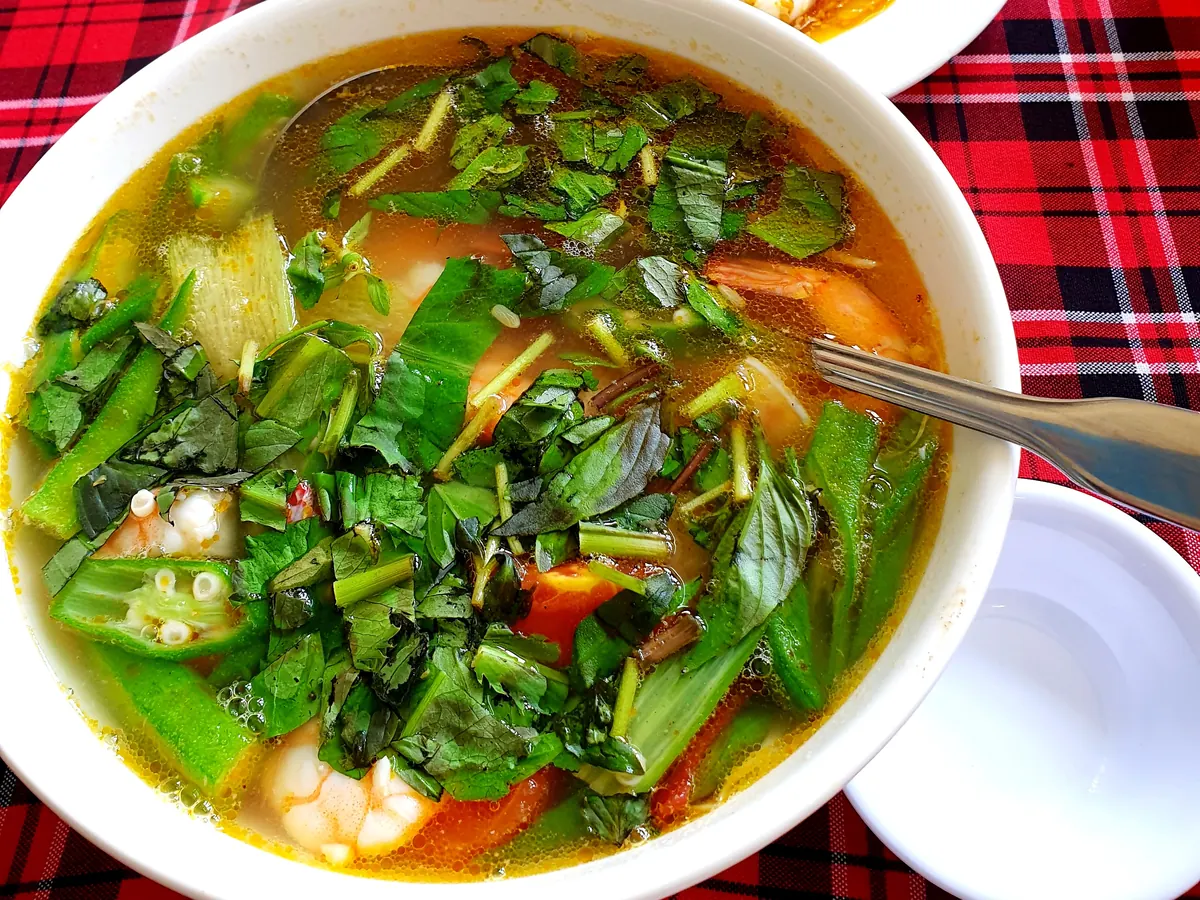
Lime, tamarind, star fruit, green mango: sour is everywhere in Southern Vietnamese cooking. Next to them, a plain yogurt or a green apple. The game: a funny-face contest, with photos to prove it. For dinner, a canh chua, the sour soup of the South: the sourness of tamarind, the sweetness of pineapple, the saltiness of nước mắm and the heat of chili, all in the same bowl.
What it teaches your child: to put words to what they feel. “It squeezes my cheeks” or “it stings my tongue” says more than “it’s yucky.” The ministry’s guide puts it this way: “by putting their food sensations into words and explaining their choices, pupils develop language skills that help build self-confidence.”
Word of the day: chua — and in French, acide.
Wednesday: salty and umami
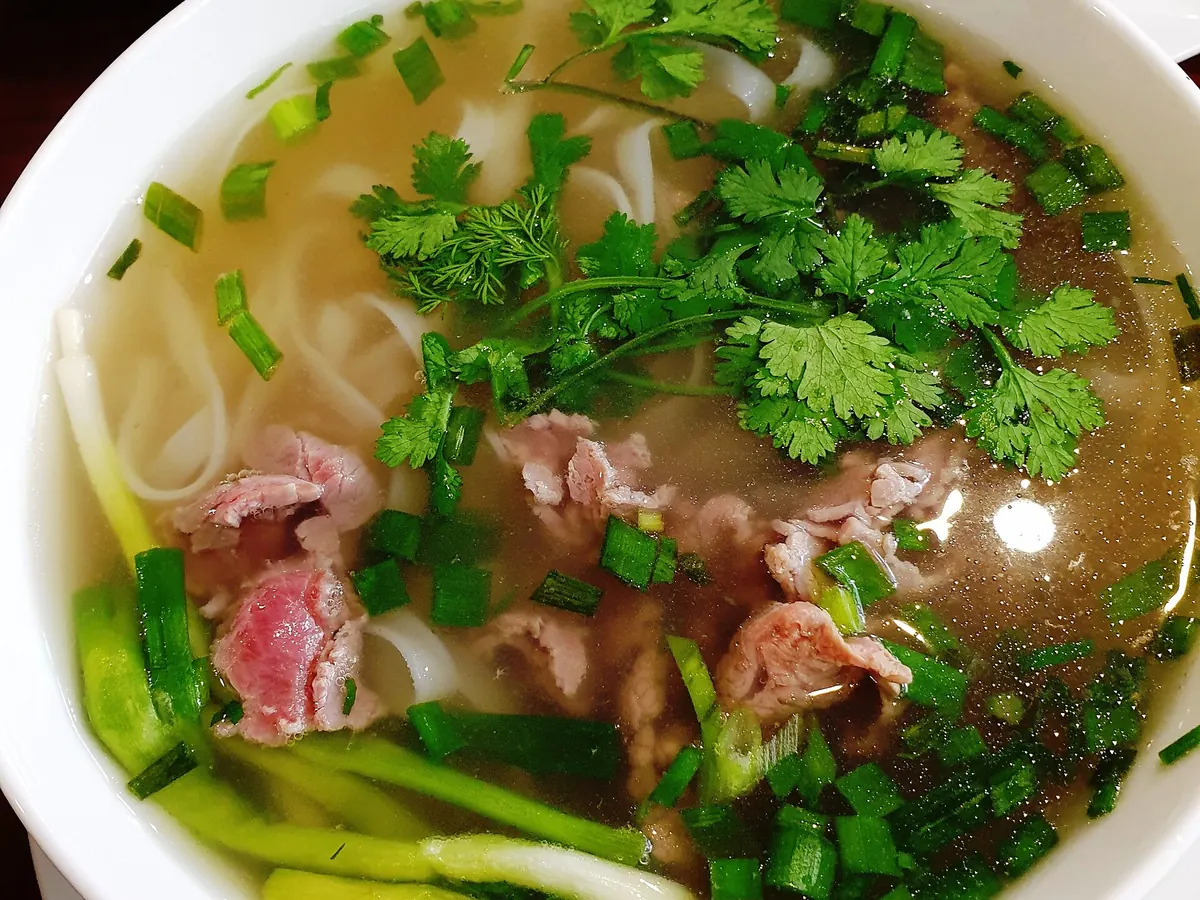
Umami is the flavor of broth, Parmesan and mushrooms. It was named in 1908 by the Japanese chemist Kikunae Ikeda, and your child tastes it at every Vietnamese meal: it’s nước mắm, fish sauce. The experiment: a drop of nước mắm in a glass of warm water, then a shaving of Parmesan. What do they have in common? The game: taste the broth of a phở and guess what’s in it: star anise, cinnamon, charred ginger and onion.
What it teaches your child: where food comes from. From Grade 1, the French curriculum asks children to sort foods by origin: animal, plant or mineral. Nước mắm is fish and salt; Parmesan is milk; star anise is the fruit of a tree.
Word of the day: mặn — and in French, salé.
Thursday: bitter
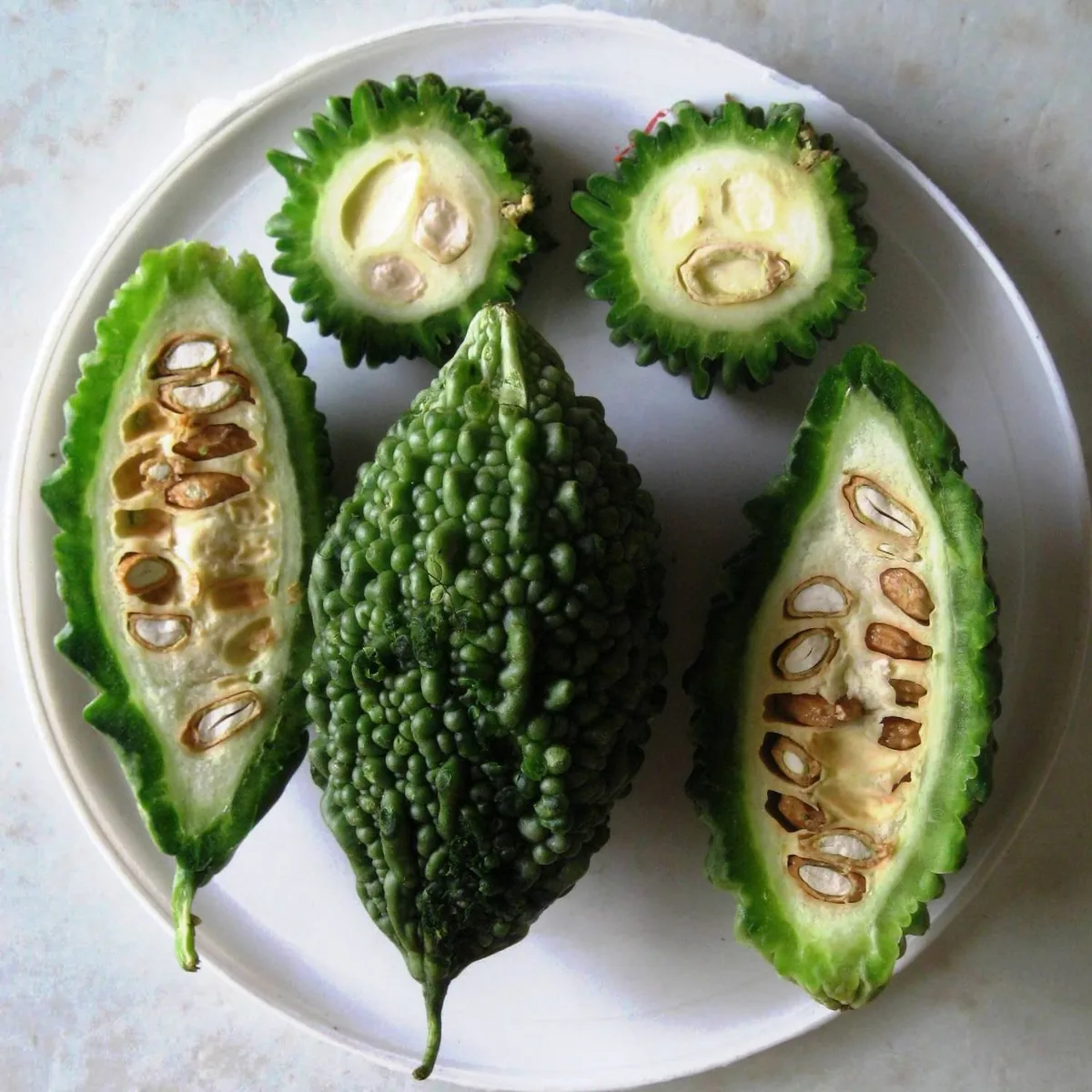
The hardest one, saved for the middle of the week. To taste in very small bites: khổ qua, the wrinkly cucumber called bitter melon in English and margose in French; the white pith of a pomelo; a square of dark chocolate. A story to tell: in the South, many families eat khổ qua soup at Tết, the Lunar New Year, because its name can also be read as “hardship passes” (Tuổi Trẻ, in Vietnamese).
What it teaches your child: to get comfortable with the unfamiliar. Being wary of a new food is normal: Anses calls it food neophobia, “a normal phase of development” that begins around 18 months and shows mostly between ages 2 and 6. A young child needs at least eight exposures to accept a food they first refused: a “no” on Thursday is not a final answer.
Word of the day: đắng — and in French, amer.
Friday: herbs, smells and textures
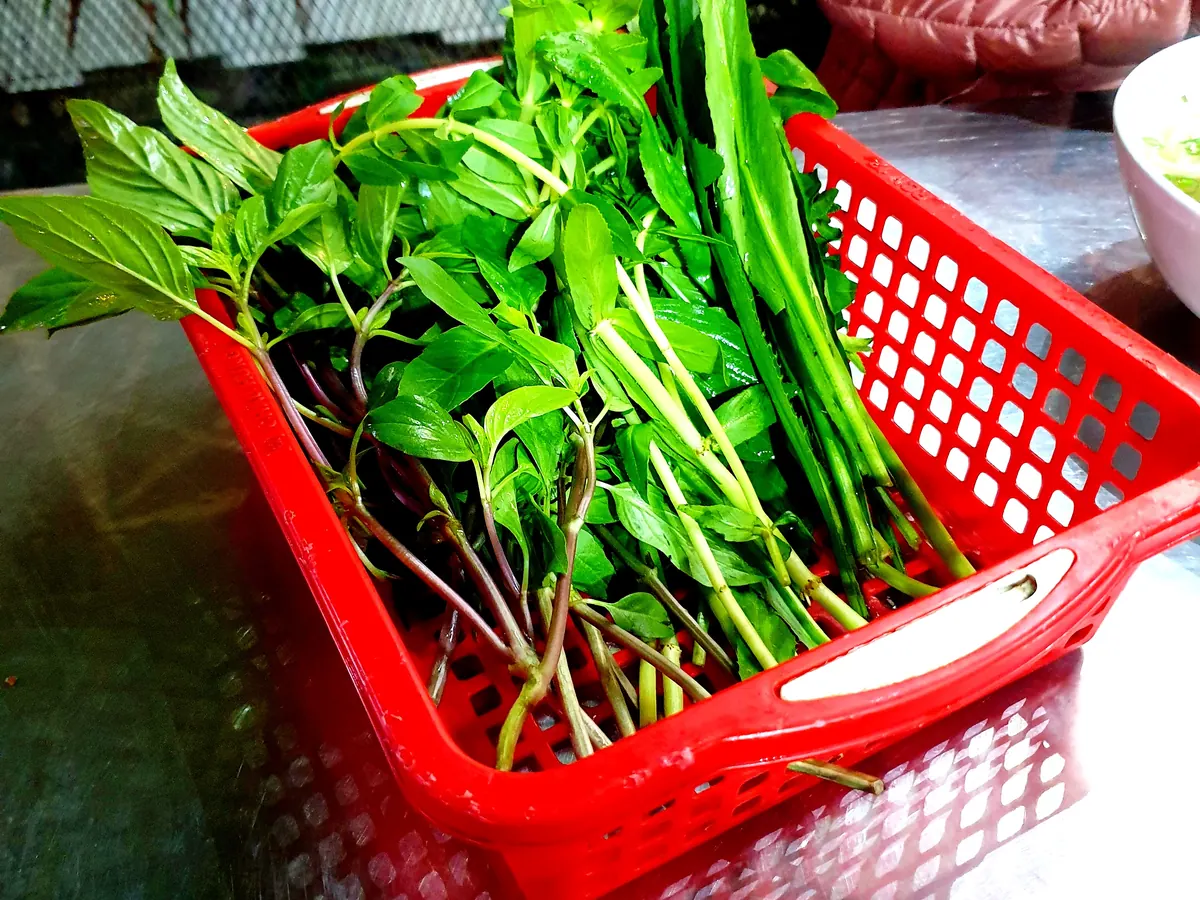
The plate of fresh herbs that comes with phở or bánh xèo: Thai basil (húng quế), mint (húng lủi), perilla (tía tô), Vietnamese coriander (rau răm), sawtooth coriander (ngò gai). The game: guess the smell. Blindfolded, sniff an herb, a stalk of lemongrass, a piece of ginger, and guess. Then the textures, which Vietnamese names better than English: giòn, the crunch of bánh xèo; dai, the chewiness of tapioca pearls; mềm, melt-in-your-mouth soft; and bùi, with no equivalent in English (or in French), the round, mellow taste of roasted peanuts or sweet potato.
What it teaches your child: that taste involves all the senses. From age 4, the French kindergarten curriculum asks children to match each sense with its organ: the nose and smell, the tongue and taste.
Word of the day: bùi. Ask your child to invent a translation, in English, or why not in French.
The weekend: to the market, then to the table with friends
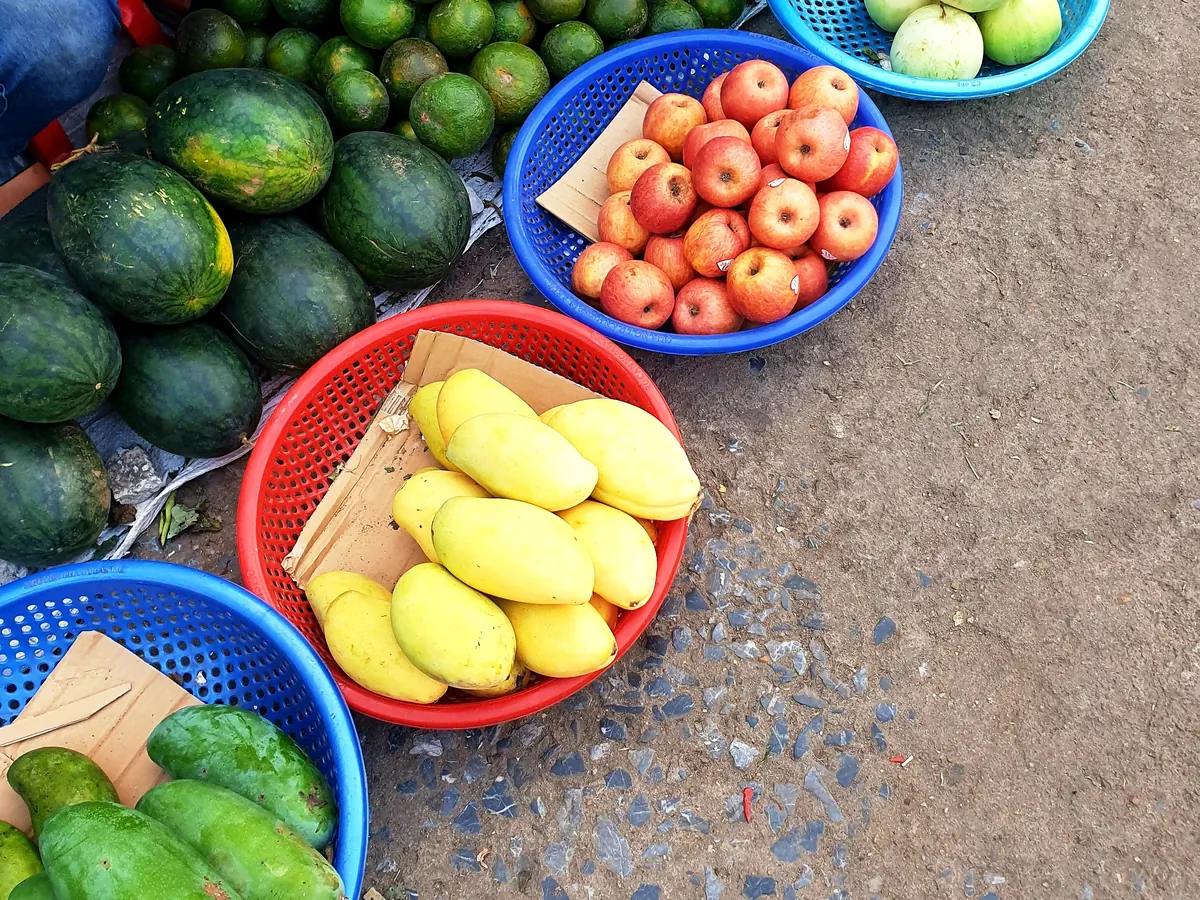
Saturday morning, at your neighborhood market, just one mission: pick a fruit you have never tasted and ask the vendor its name. Dragon fruit, custard apple, jackfruit: at home, cut it, taste it, describe it with all the words of the week. And guava is eaten the Vietnamese way, dipped in muối ớt, chili salt: sweet, sour, salty and spicy in the same bite.
Sunday, a snack from around the world. Ho Chi Minh City is a trip around the world in itself, so invite a family from the class: everyone brings what they eat for a snack at home, kimbap, onigiri, pain au chocolat or bánh da lợn.
What it teaches your child: according to Anses, seeing a food at the market, touching it, smelling it and cooking it makes it familiar “without necessarily having the child taste it,” and the example of other children matters, not just that of parents. The ministry’s guide sums it up: “food is a living heritage, a shared culture made of sharing and exchange.”
And at school?
At French International School Boule & Billes, taste isn’t learned just one week a year. At the canteen, your child eats French, Vietnamese and international dishes every day, made on site with fresh ingredients. And this week, each day has its color and its emotion, borrowed from The Color Monster, Anna Llenas’s picture book, a favorite in kindergarten: green for calm on Monday, blue for sadness or pink for love on Tuesday, red for anger on Wednesday, yellow for happiness on Thursday. Children are invited to come dressed in the color of the day. At home, keep the game going: what emotion does mango give your child? And khổ qua?
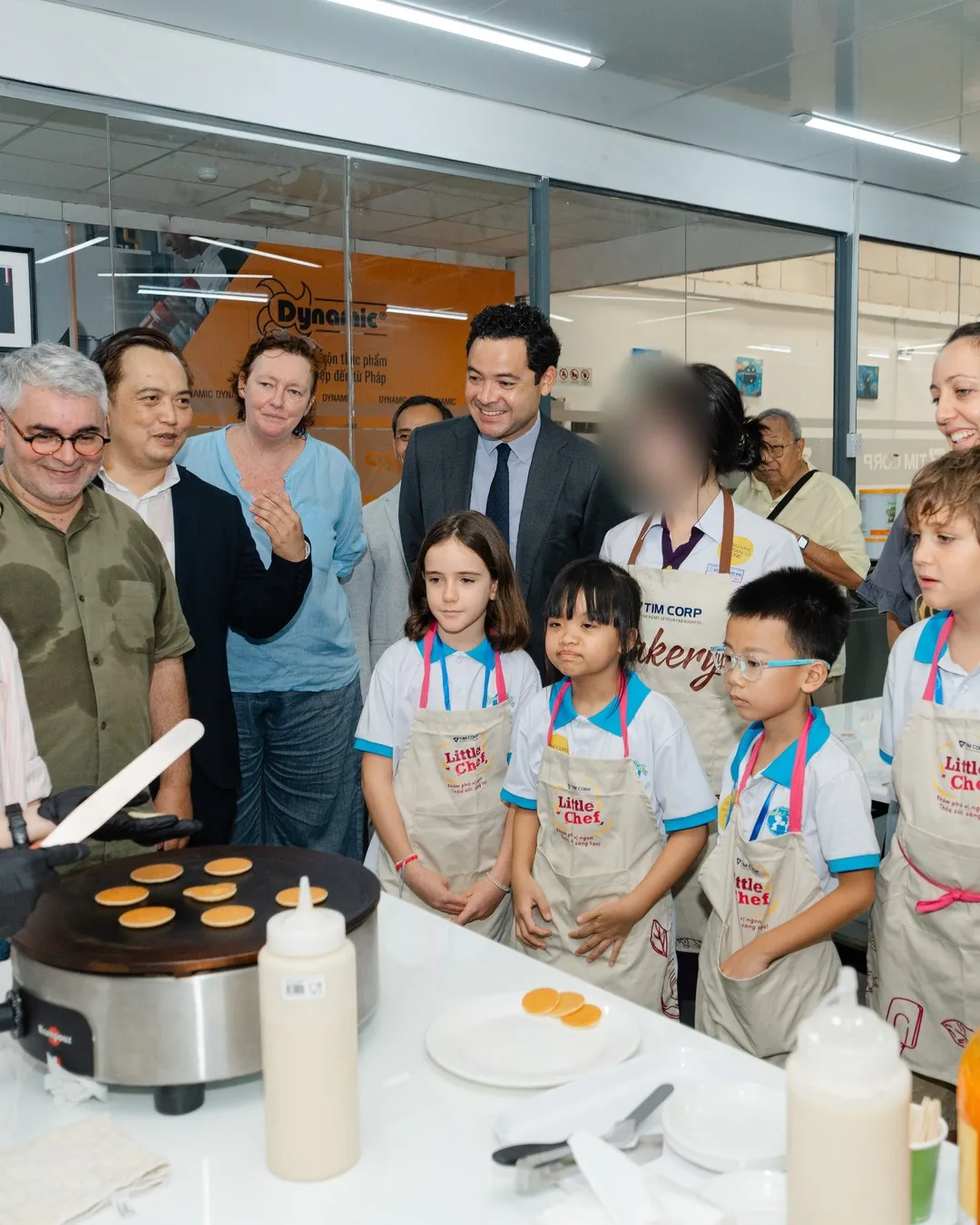
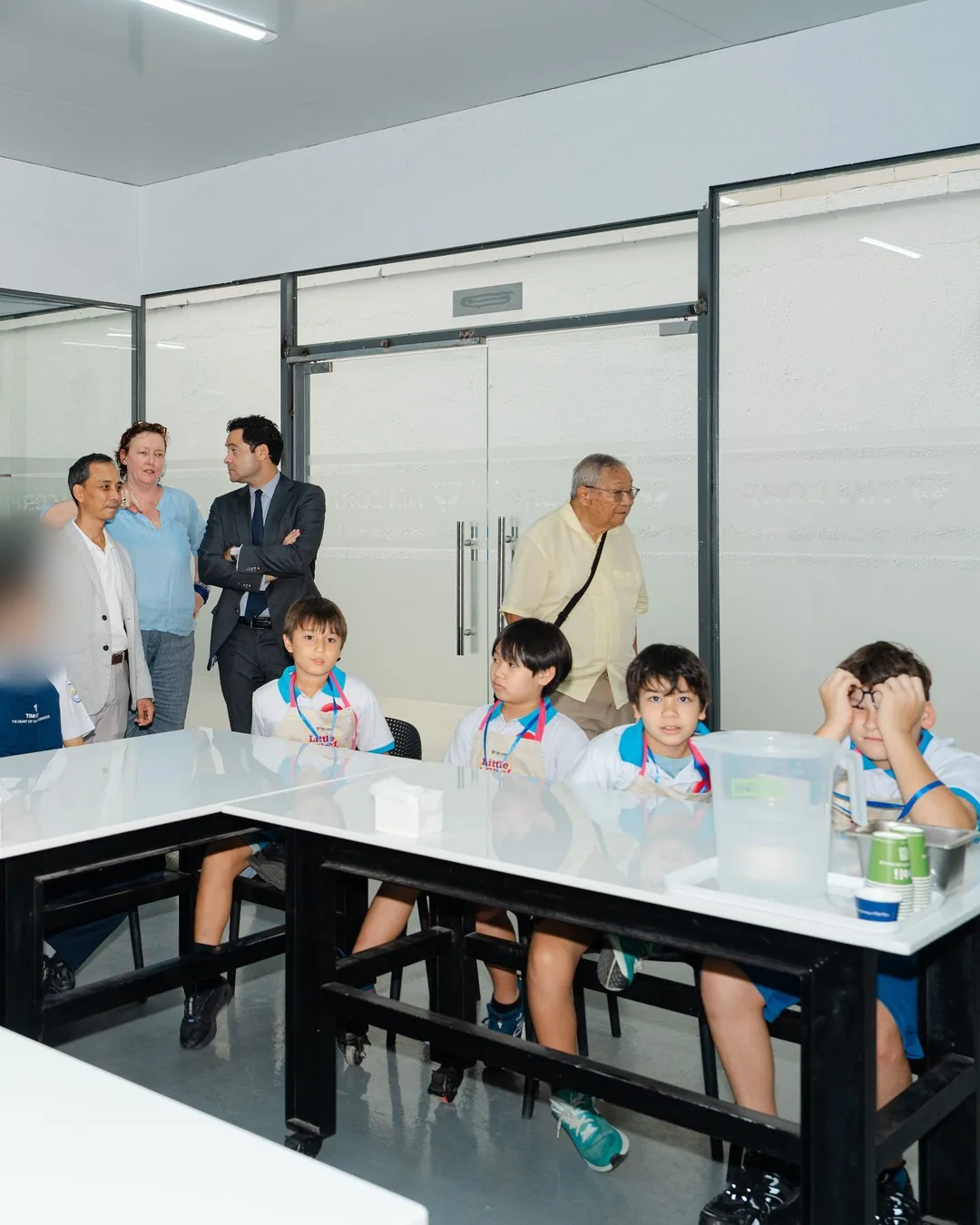
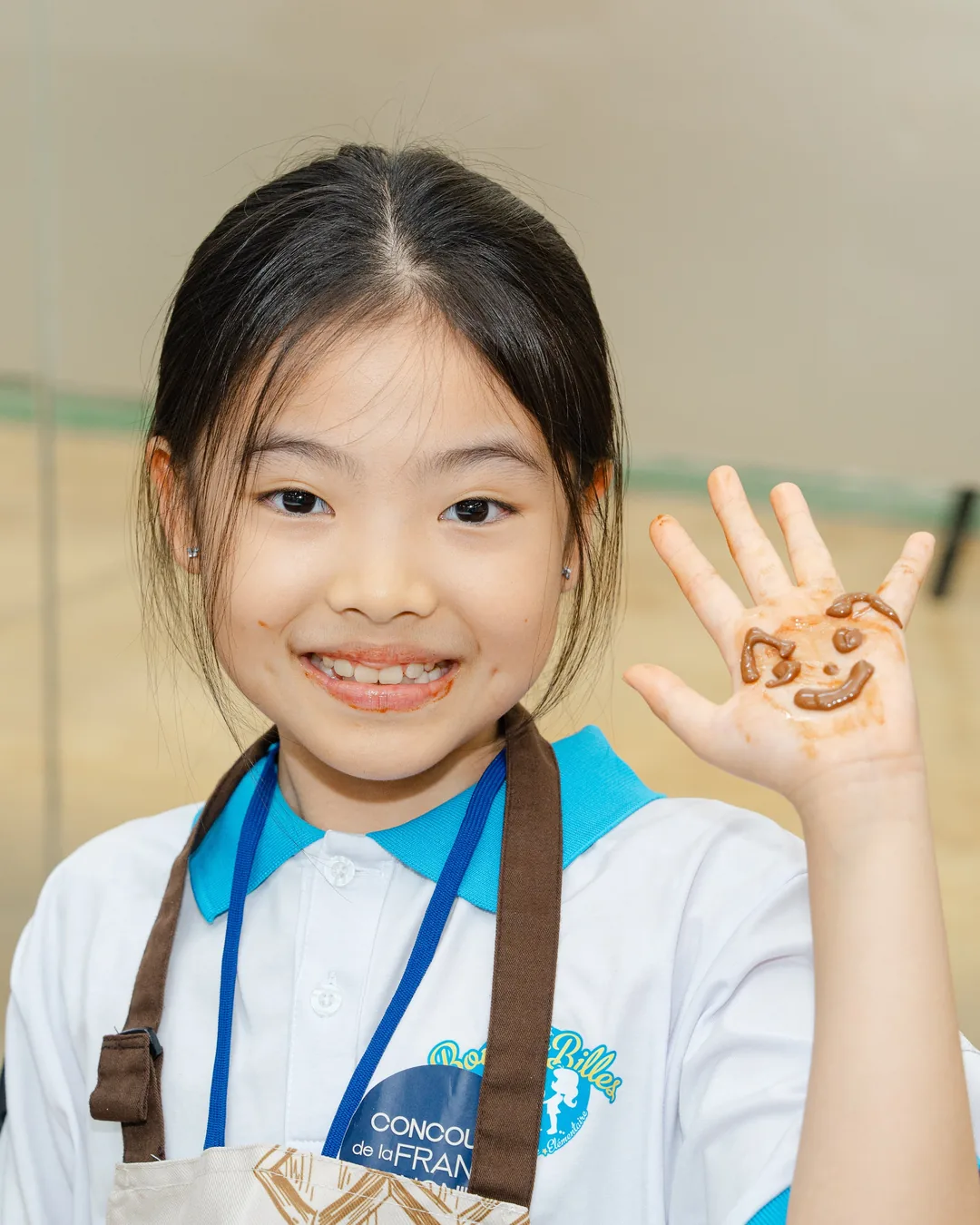
Boule & Billes welcomes children from 6 months to 11 years old on its two campuses, in Thảo Điền and Bình Thạnh, in three languages, and follows the French national curriculum from kindergarten to Grade 5, with accreditation from the AEFE, the Agency for French Education Abroad. If you are looking for a French school that also awakens the palate, come and see it on an ordinary day: book a school visit. No need to speak French: our team also speaks English and Vietnamese.
And at your house, which flavor got the funniest face, or the biggest smile? Tell us in the comments.
Chúc cả nhà ngon miệng: enjoy your meal, everyone. And in French: bon appétit à toute la famille.