



In Ho Chi Minh City, there’s no shortage of nurseries, or daycare centers as many parents call them: French, English-speaking, Vietnamese, bilingual, just around the corner or across the river. Every day, even before they can talk, your child can hear one more language there than the ones spoken at home. Even in France, few families have that choice.
Then you have to choose. Most parents visit two or three nurseries before deciding, and come away with an impression. It matters, but it won’t tell you how your child’s day will go when you’re not there.
Here’s what to look at and ask on every visit, and why. This guide works for any nursery. Under each question, you’ll also find the answer from the nursery at French International School Boule & Billes, in Thảo Điền: a way to see what a precise answer looks like.


Before you visit: what your family needs
Four answers to have in mind before your first appointment: they’ll save you visits that lead nowhere.
- Your child’s age at entry. Some nurseries take babies from a few months old, others only from 18 months or 2 years.
- The schedule you need. Full days, mornings, a few days a week: not every nursery offers everything.
- Languages. The ones spoken at home, and the one you’d like to give your child on top.
- What comes next. At 3, your child starts school. Knowing where, and whether the nursery prepares them for it, changes how you choose.
At Boule & Billes: from 6 months, full days from 7:30 a.m. to 4:30 p.m. or mornings only, full year or pay-as-you-go tickets. At 3, your child moves up to First Year (the first year of kindergarten) at the same school, a kindergarten accredited by the French Ministry of National Education.


Ten questions to ask during the visit
Write down each nursery’s answers: by the third visit, memories start to blur.
1. How many children does each caregiver look after?
This is the question that matters most: a caregiver with too many children around them can’t respond to any of them in time. Ask for the ratio in your child’s own group, at the hours they’ll be there, and who steps in when a caregiver is absent. Then watch: are the caregivers sitting on the floor, at the children’s eye level?
At Boule & Billes: Yen Thu, the nursery director, works with seven caregivers (early childhood educators, childcare assistants and nursery aides).


2. What language will the caregivers speak to your child, and to you?
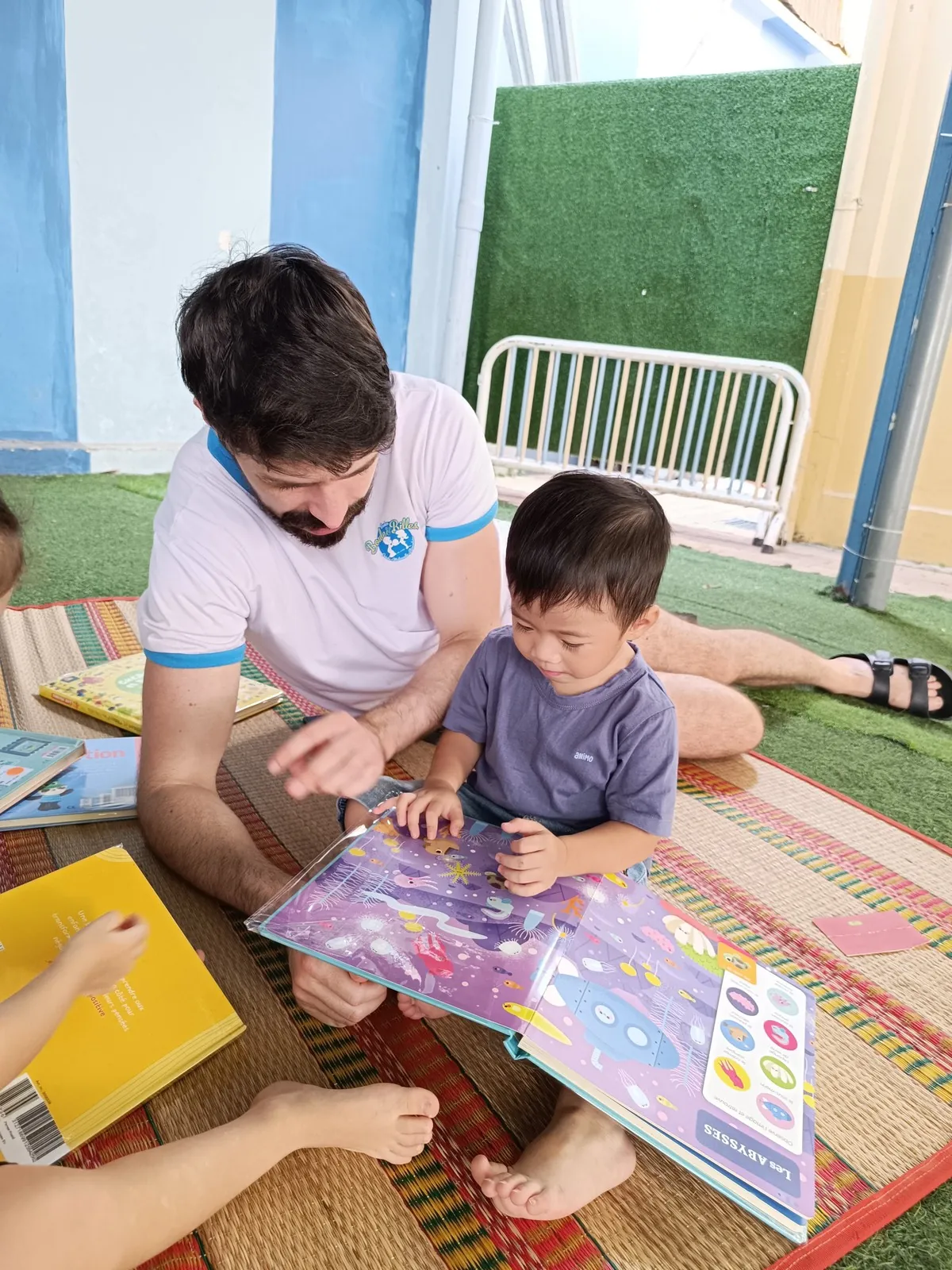
Before age 3, children don’t study a language, they catch it: through the same words, repeated every day at mealtimes, diaper changes and getting dressed. Ask what language the person who changes and feeds your child speaks, not just the one leading the activity. And in what language the team will keep you updated.
At Boule & Billes: the team speaks French with the children all day, and talks with you in English, French or Vietnamese.

3. How do the first days work?
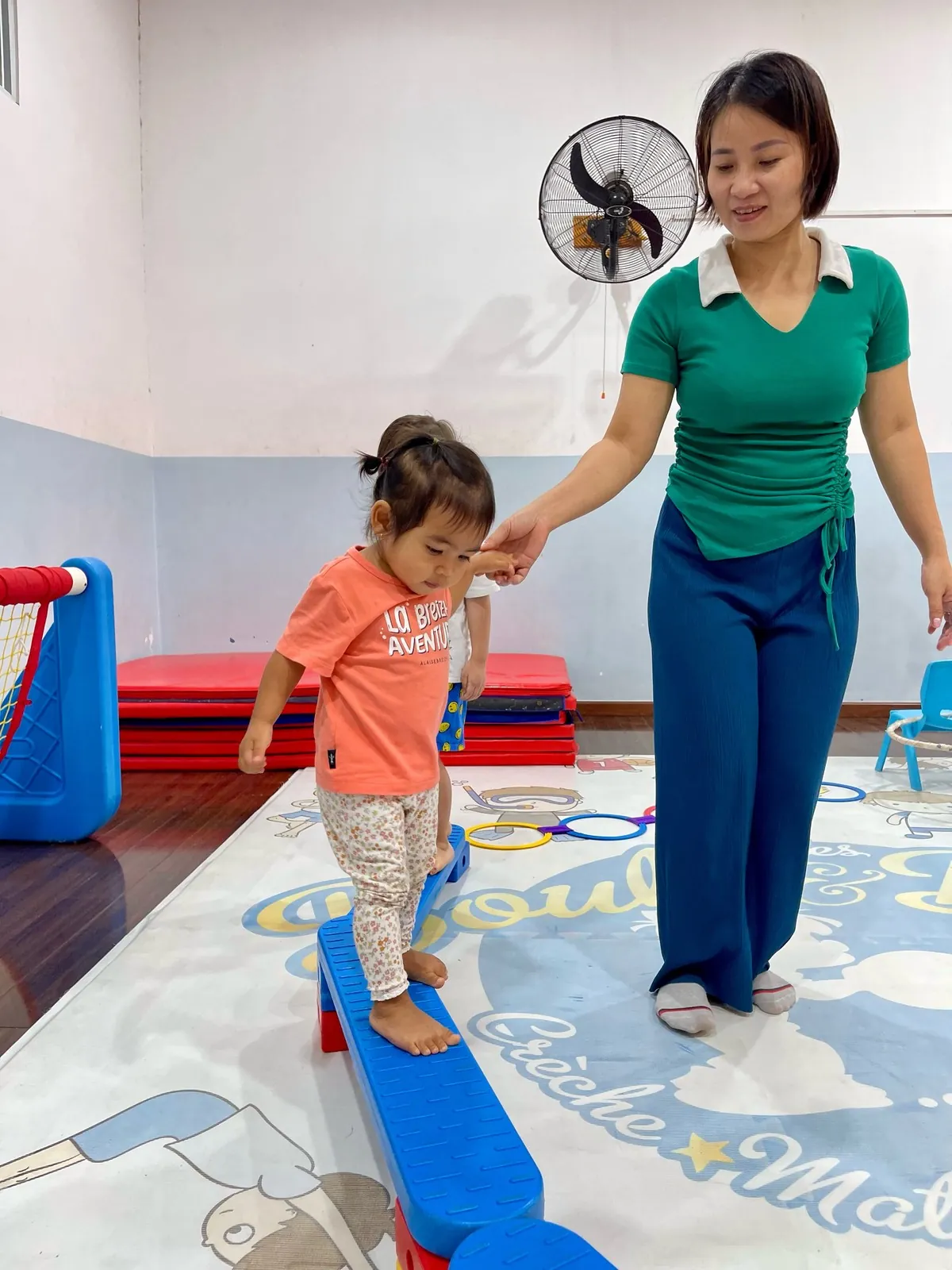
A good adaptation period happens in stages, and with you. Ask how many days it lasts, whether you can stay, and who decides to extend it if your child isn’t ready. How to get through it on your side: see “The first days” below.

4. Where are the meals prepared?
Cooked on site or delivered, suited to each age, free of anything your child is allergic to: ask to see the month’s menu, and the kitchen if possible. For a baby, ask who prepares the bottles, and on what schedule.
At Boule & Billes: meals are cooked on site every day by the school’s cooks, with one menu for babies and one for older children; bottles are prepared at the nursery, on your baby’s schedule.
5. Where and how will your child sleep?
Their own bed or a shared mattress, a quiet, dark room, nap time at the same hour for everyone or based on each child’s needs: ask to see the nap room. A nap that goes badly shows in the evening, at home.
At Boule & Billes: each child sleeps as long as they need, and they wake up gradually until 3:00 p.m.
6. Who takes care of your child if they’re sick or get hurt?
Ask who is trained in first aid, at what temperature they’ll call you, who can give your child medicine, and which clinic is nearest.
At Boule & Billes: Yen Thu is a qualified nurse, and the whole team is trained in first aid.
7. Who comes in, and who can pick your child up?
Watch how people get in. Ask who is allowed to pick up your child, and what happens if someone else shows up. During the visit, also look around from a child’s height: stairs, outlets, furniture corners, the playground surface.
8. What happens on days when the air is polluted?
In Ho Chi Minh City, on some days the Air Quality Index (AQI) climbs high enough that little ones shouldn’t play outside anymore. Ask whether there’s a written rule, at what AQI level children stay indoors, and how the rooms are ventilated.
At Boule & Billes: the rule is written down and published. For the nursery, outdoor play is cut to two 15-minute sessions a day from an AQI of 151, and stops from 171.

9. How will you know how your child’s day went?
What they ate, how long they slept, whether they cried: at this age, your child won’t tell you. Ask how the team passes it on to you.
At Boule & Billes: in person at drop-off and pick-up, in the communication notebook, and through the photos of the week on ClassDojo.

10. Is there a place available, and from when?
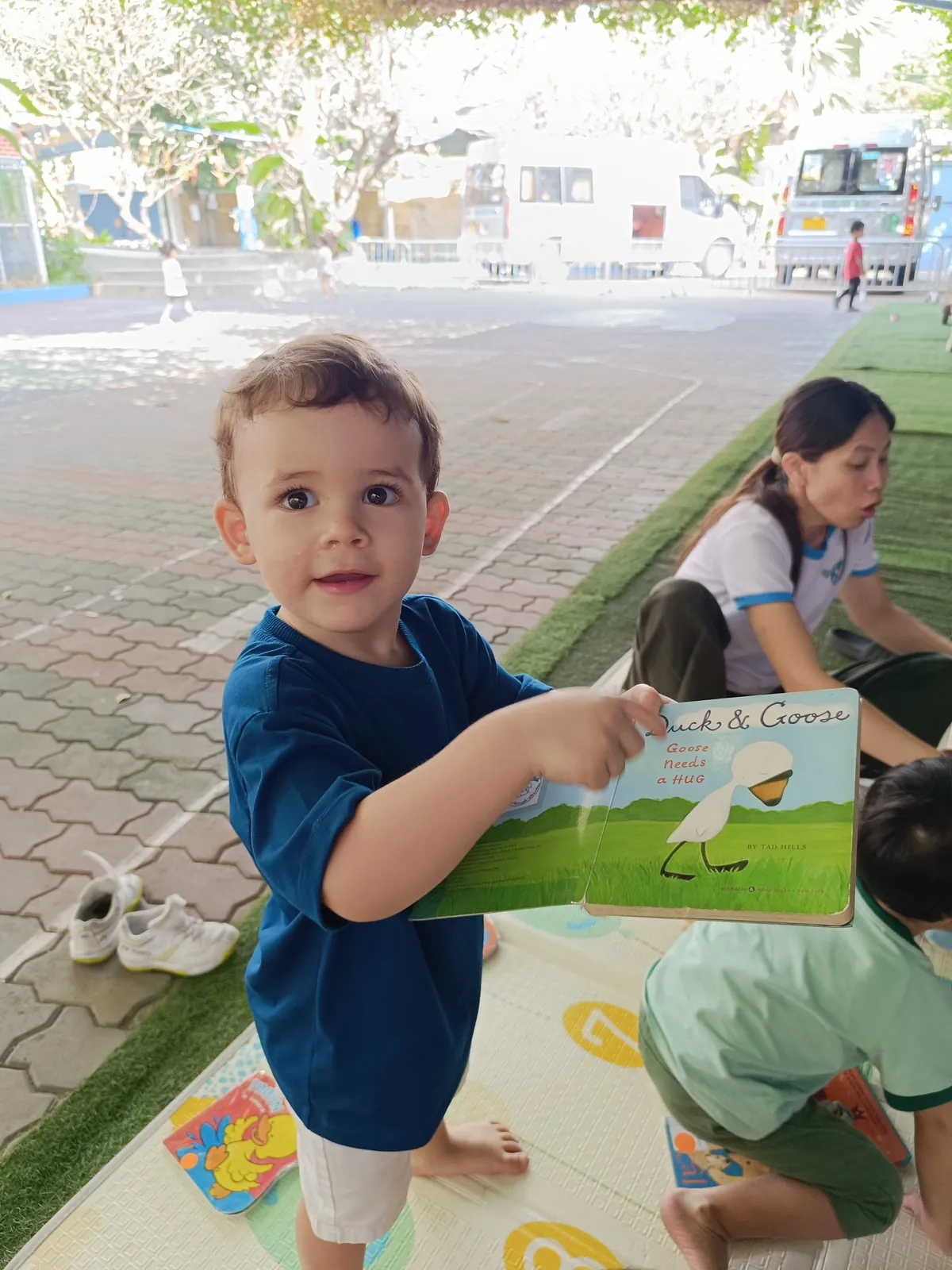
Ask whether there’s a waiting list, how it works, and whether your child can start mid-year. A place promised for September won’t help if you arrive in January.
At Boule & Billes: children can start mid-year, subject to available vacancies, and tickets let your child come without waiting for the start of the school year.
To compare in your own time. The nursery brochure, in 8 pages: a typical day, the three-day adaptation period, what to pack in their bag and the two options. It arrives by email within seconds.
How your child spends their days
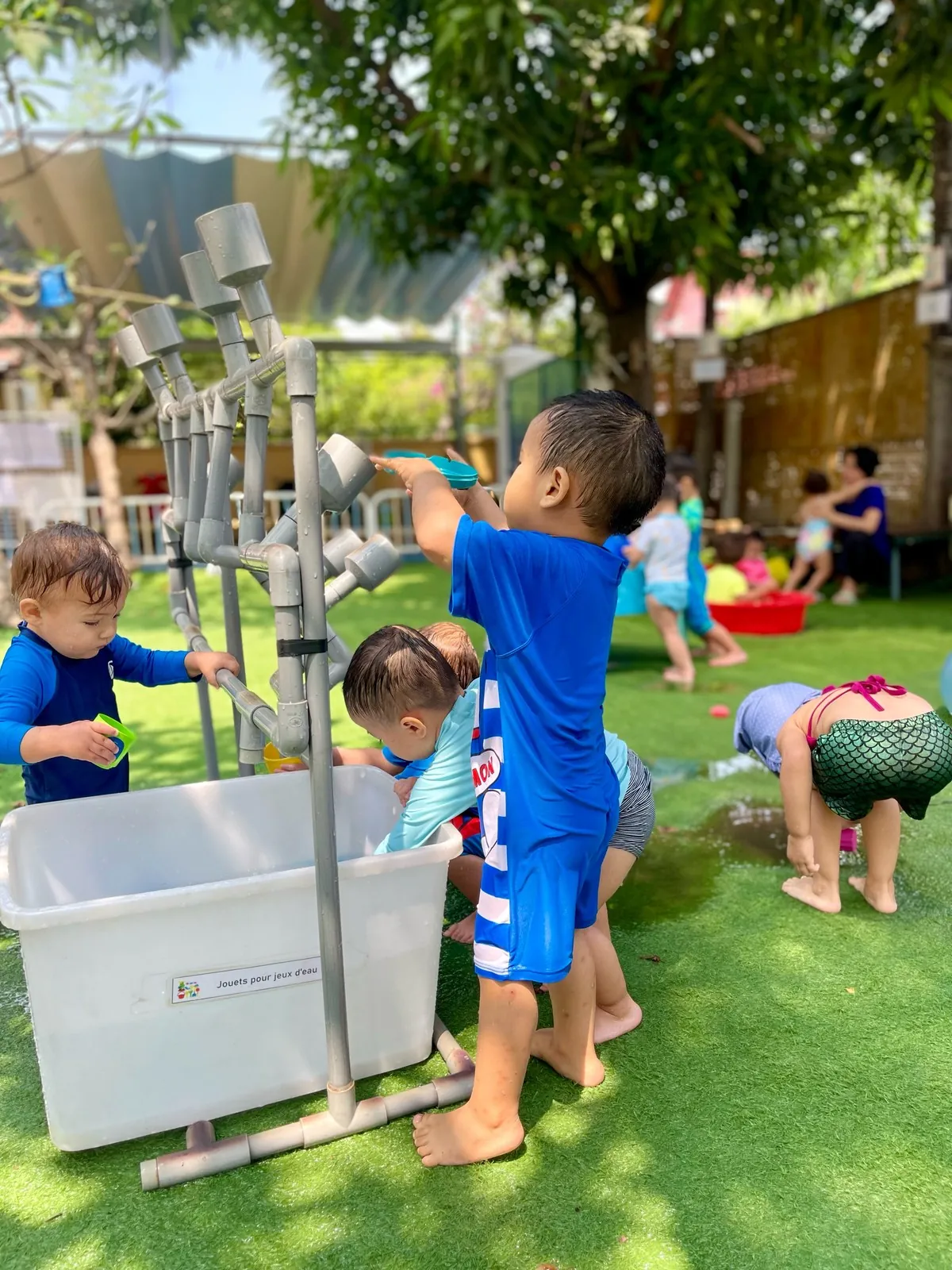
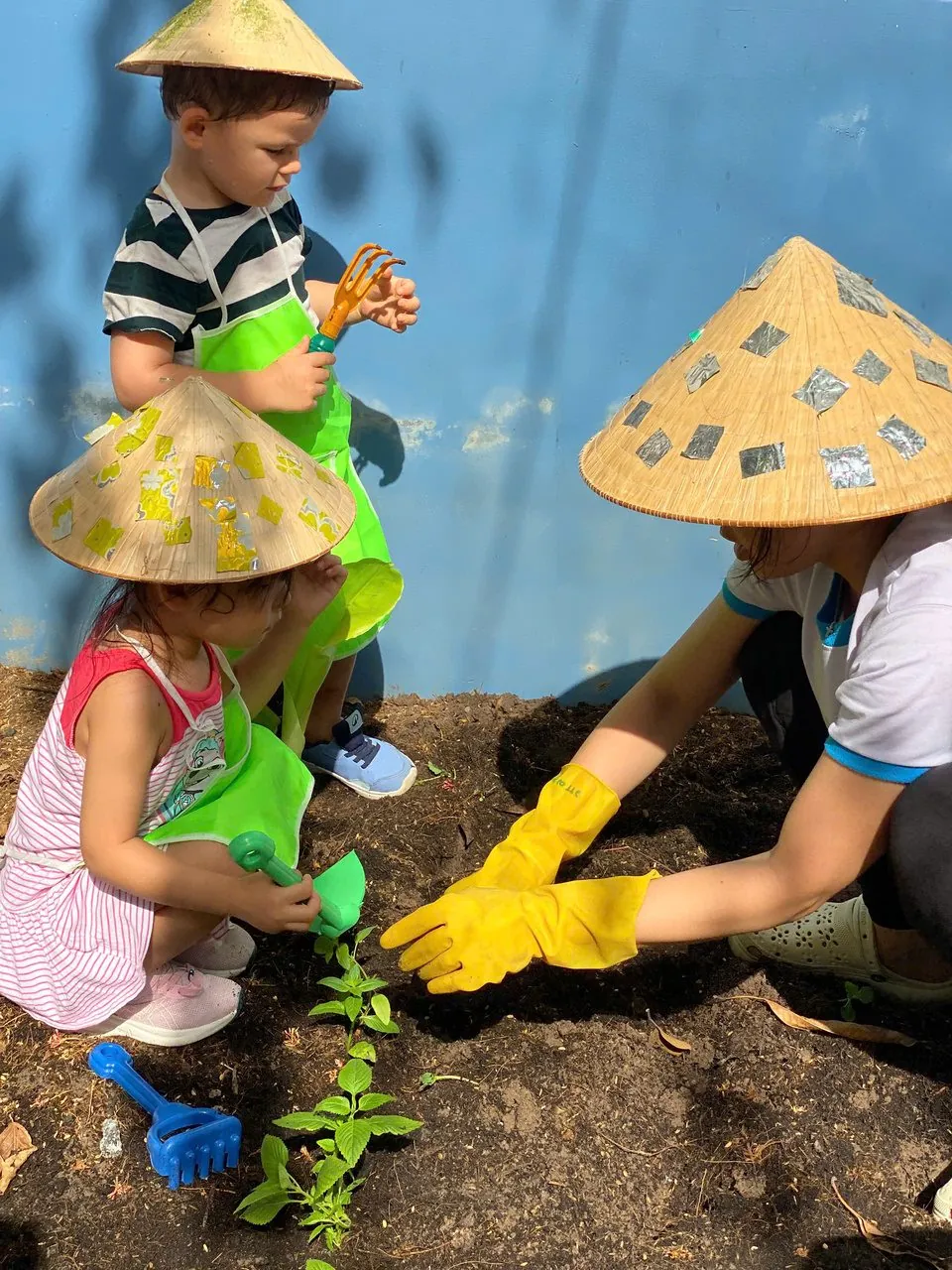
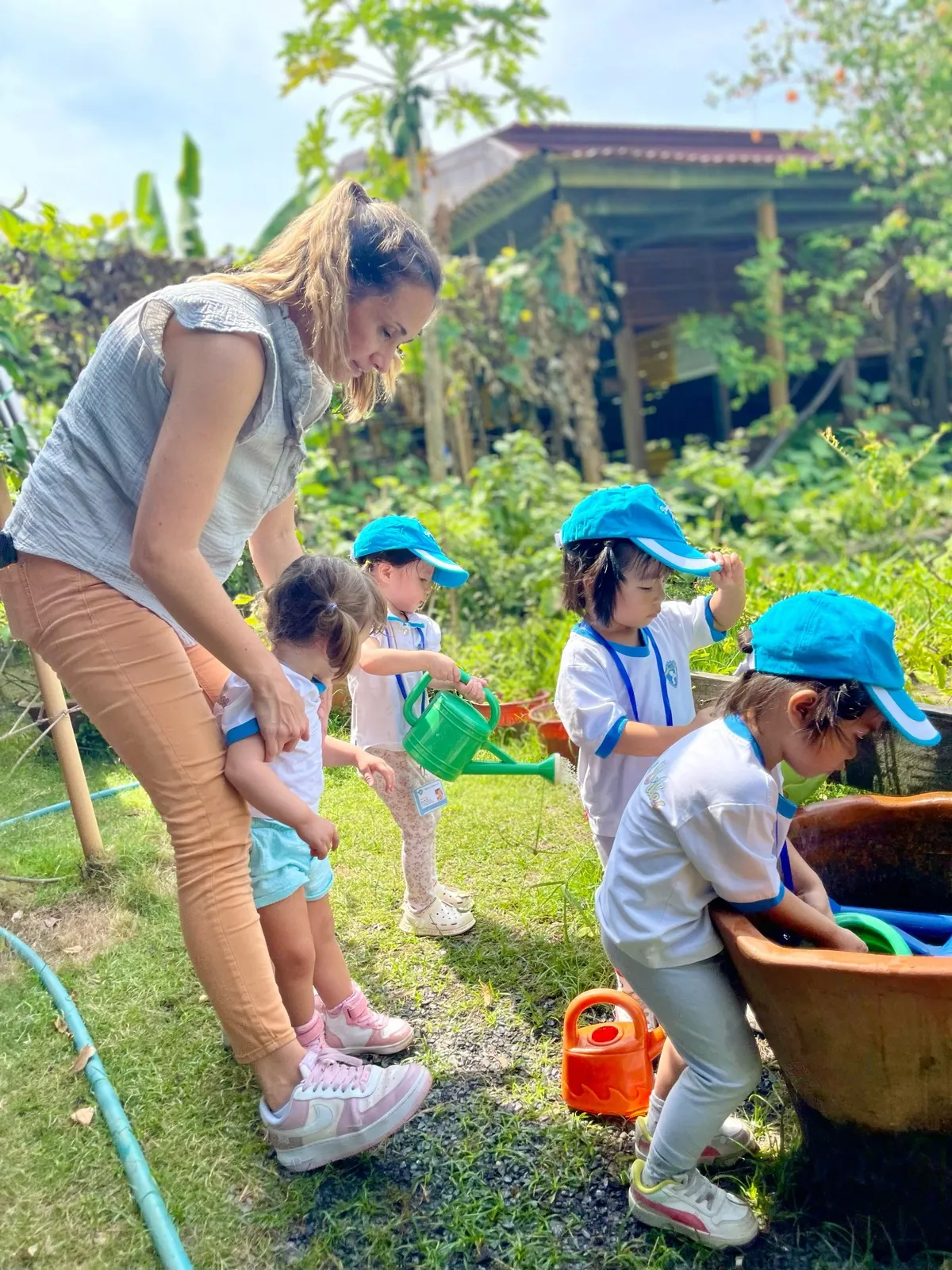
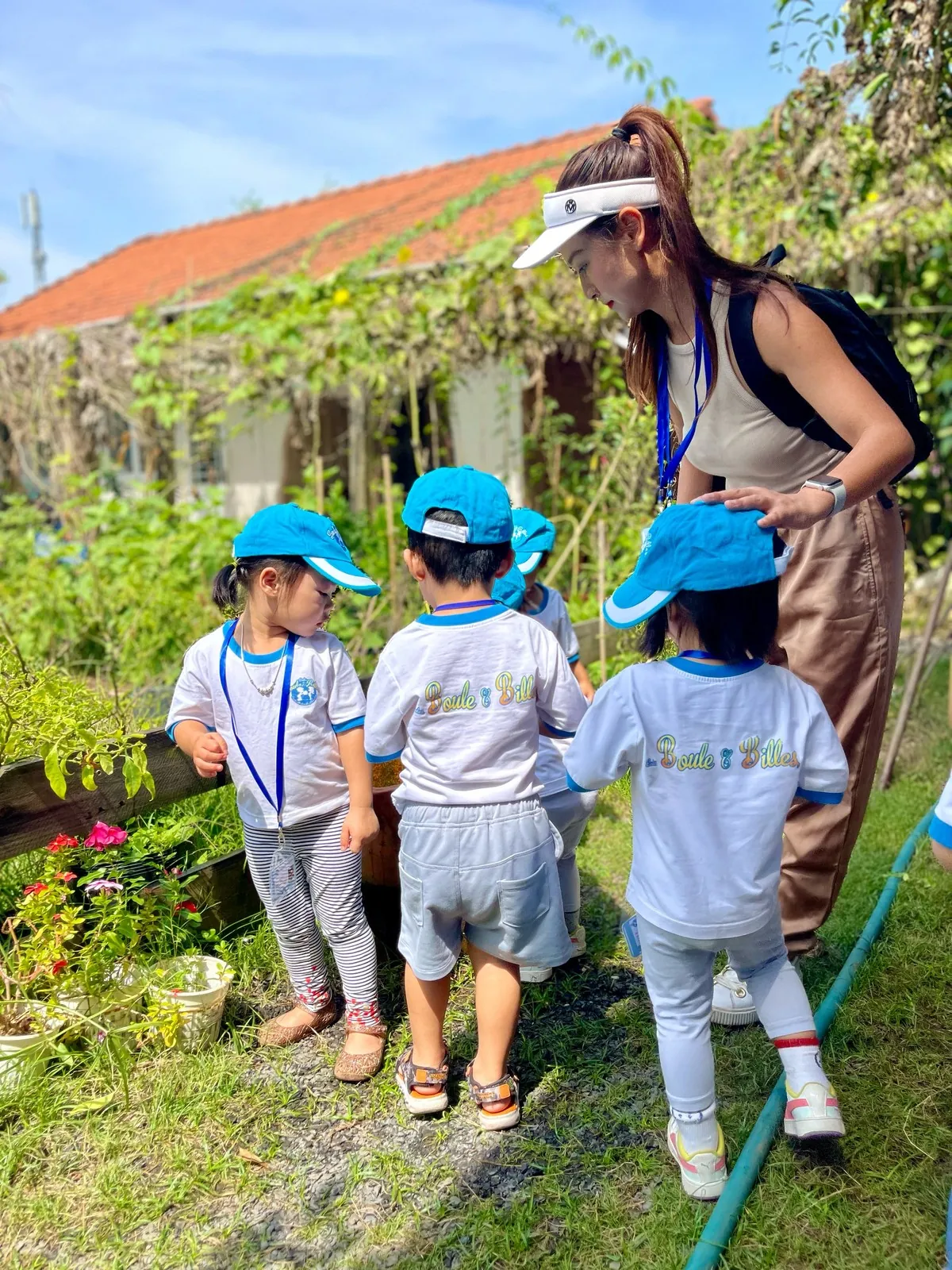
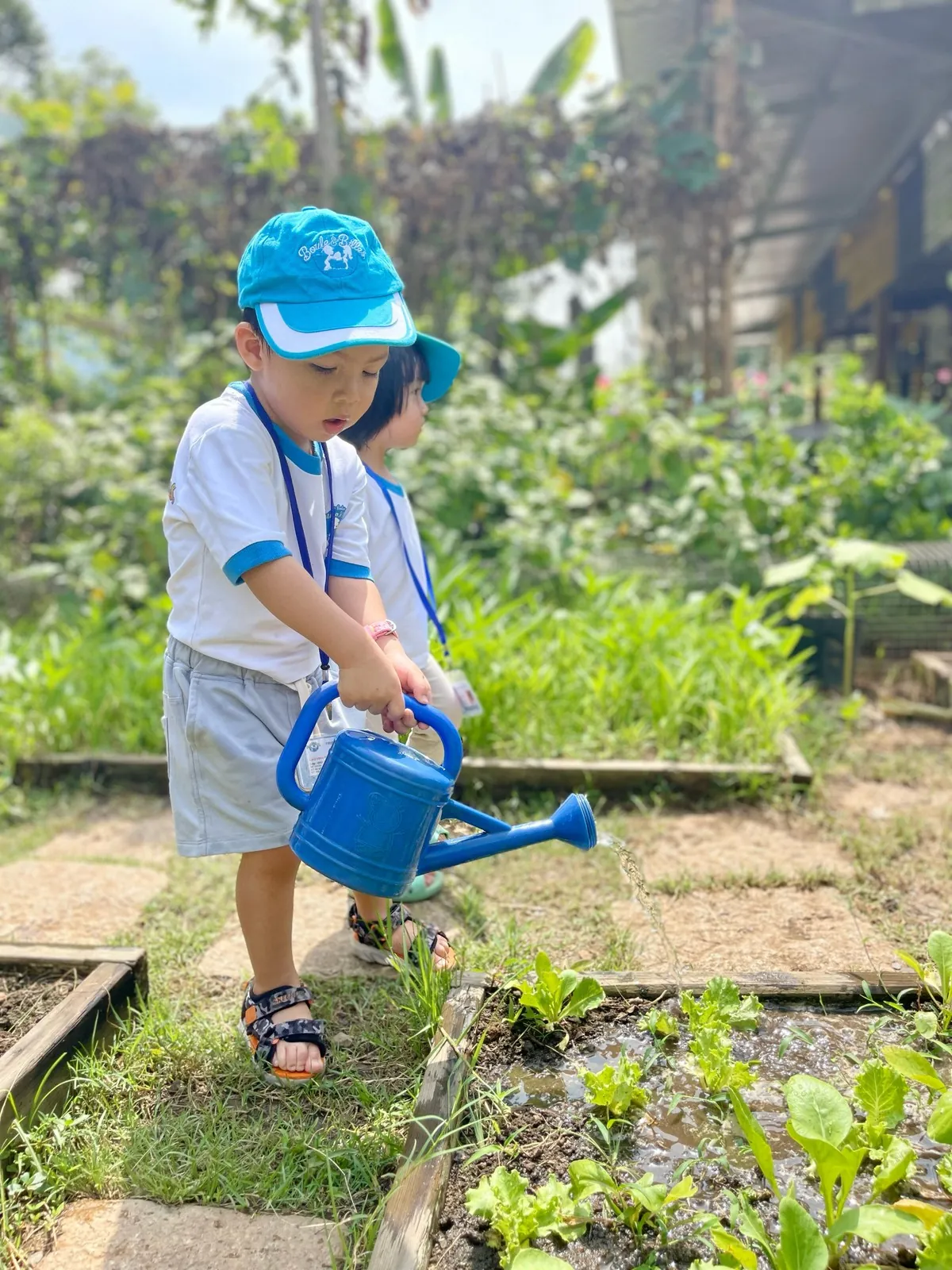
A good day at nursery looks like the one before: welcome time, songs, an activity, mealtime, nap time, snack, outdoor play. These recurring moments are what reassure a little one, and they’re how new words sink in. Ask to see the daily schedule, and what changes from week to week: painting, play dough, cooking, gardening, introduction to music.

Also check whether the nursery shares in the life of the rest of the school: parties, themed weeks, first visits to the older children’s classroom.
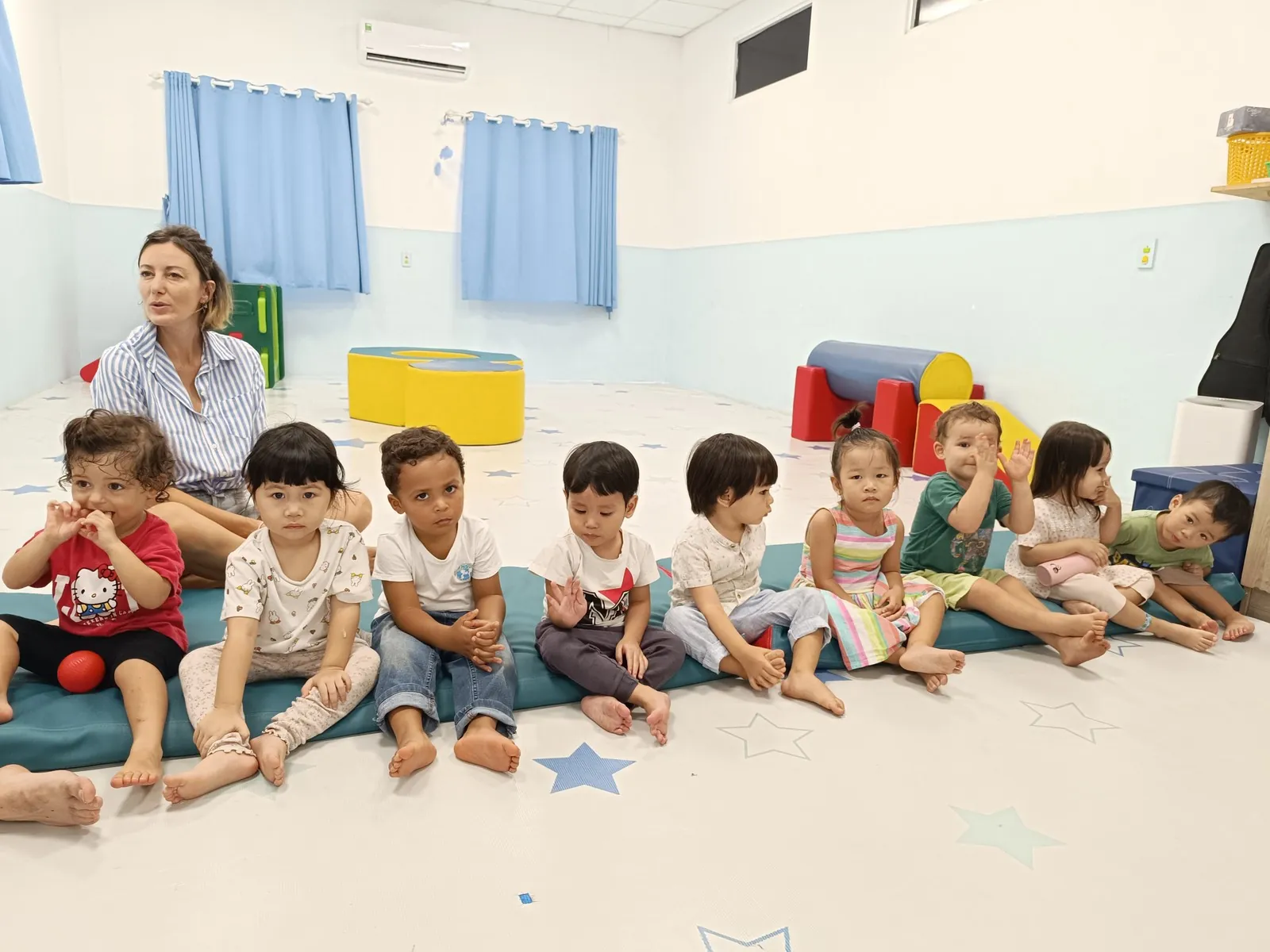
At Boule & Billes: their day in eight moments, from 7:30 a.m. to 4:30 p.m. In October, during the Semaine du goût, France’s national Taste Week, the little ones came dressed in the color of the day. And from the third term, the oldest children get to know their future First Year class.




The first days: your place by your child’s side
The adaptation period isn’t only about your child: you, too, are learning to entrust them to someone else. A few pointers, whichever nursery you choose.
- Talk to your child about the nursery before the first day, in simple words, and walk past it together if you can.
- Bring their cuddly toy or pacifier: something from home helps bridge the gap.
- Stay for the first few days, then leave decisively. A short goodbye, always the same one, is better than slipping away unnoticed: your child learns that you leave, and that you come back.
- Start with short days, and keep to regular hours.
- Expect tears when you say goodbye, and sometimes a few restless nights in the first weeks: that’s normal. Ask the team how the rest of the day went.
At Boule & Billes: a first meeting with the school management, by video call or in person, then a three-day adaptation period by your child’s side, at their own pace.
What about after 4:30 p.m.?
If you finish work late, ask what’s available after closing time, and what happens if you’re running late.
At Boule & Billes: on the Thảo Điền campus, hourly childcare takes over until 6:00 p.m., for children from 18 months, as long as you let the team know in advance.
Come and ask these ten questions
The best way to try out this guide: bring it to the Boule & Billes nursery in Thảo Điền one morning, during song and rhyme time. Yen Thu and her team will answer every one of your questions, and you’ll see the nursery in action.
Is a question missing from this list? Ask it in the comments: we’ll answer it.