
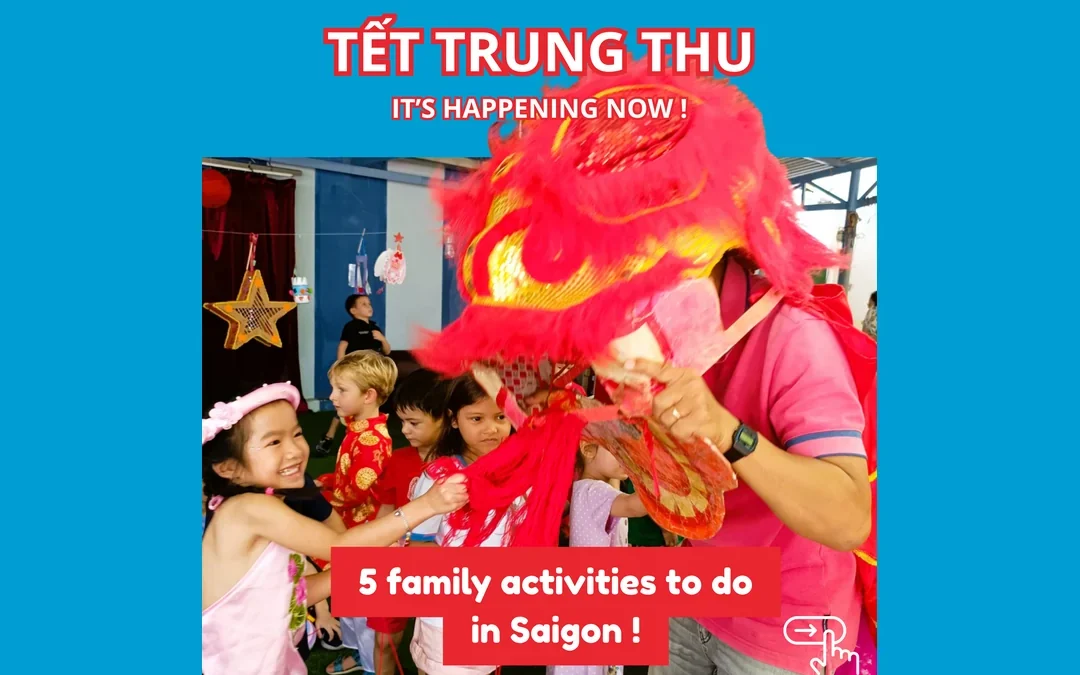
Drums in the street, lanterns on every corner, and nobody to explain why. If you have just arrived in Ho Chi Minh City, or if you are still preparing your move, Tết Trung Thu comes around fast and you have no idea what to do with it.
Here are five outings to do with your children. Real addresses, most of them free, all of them open to everyone.
Each activity comes with its sources, so you can check before you go. Most of them are Vietnamese press articles. If you do not read Vietnamese, open them in Google Chrome and accept the automatic translation, or paste the address into Google Translate: that is enough to read an address and an opening time.
Tết Trung Thu, in three sentences
The Mid-Autumn Festival falls on the fifteenth day of the eighth lunar month, at the full moon. In 2026, that is September 25.
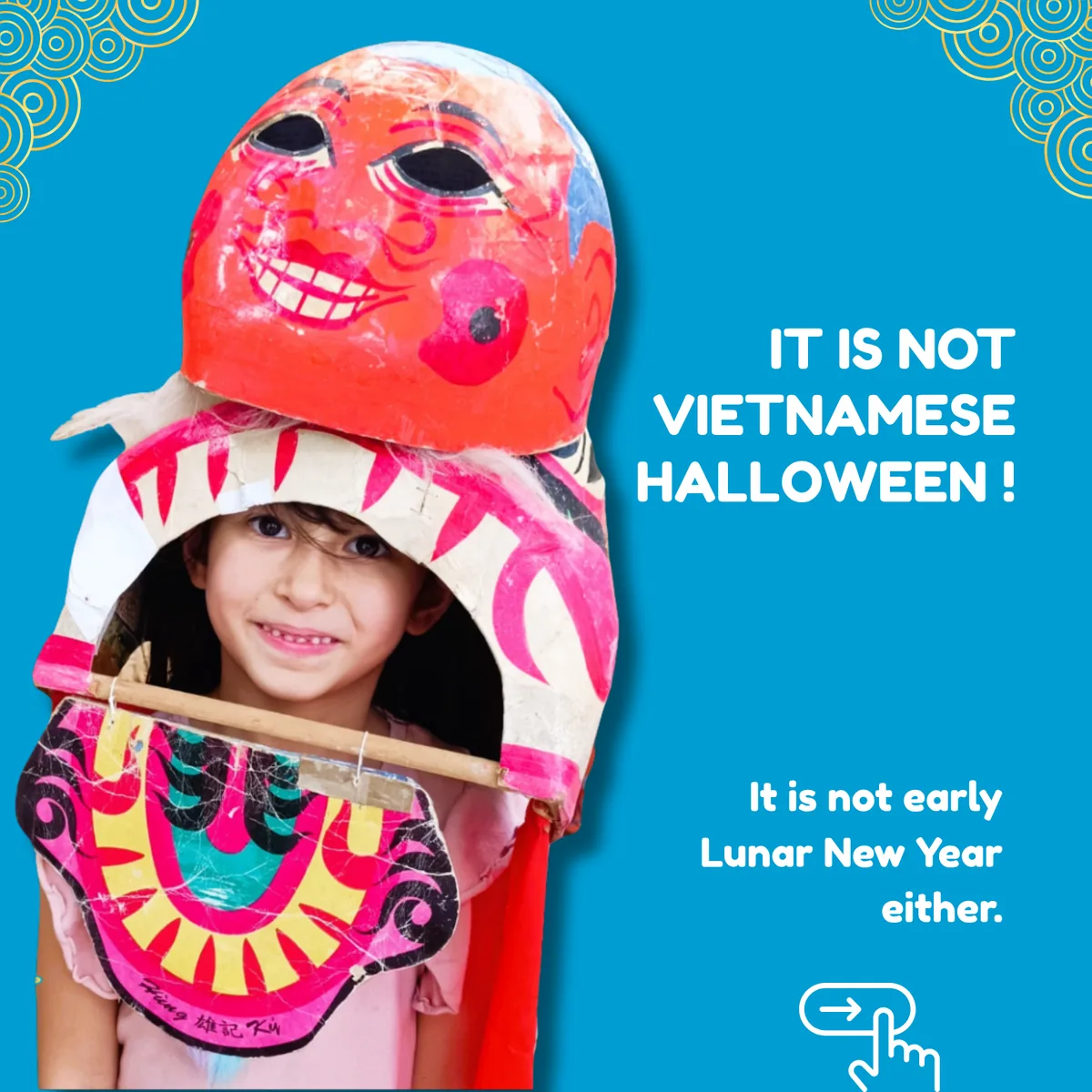
It is not a Vietnamese Halloween, and it is not an early Lunar New Year. It is the children’s festival: children are given lanterns, families share mooncakes, everyone watches the moon together, and the múa lân troupes, the lion dance, go from street to street to the sound of the drum.
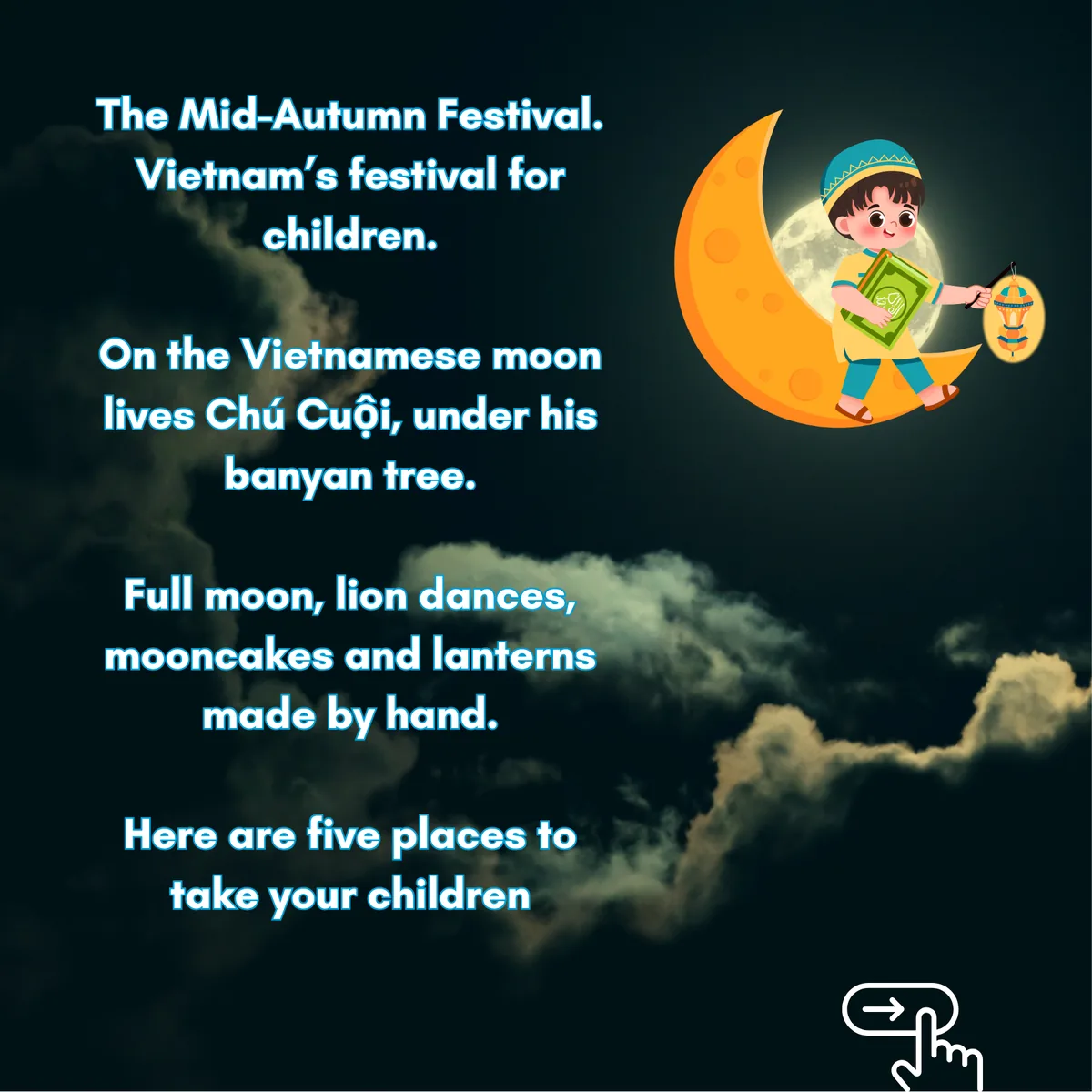
And no, there is no rabbit on the moon here. That one is Chinese. On the Vietnamese moon lives Chú Cuội, sitting under his banyan tree, with Chị Hằng, the moon lady. Your children will hear these two names everywhere for two weeks.
1. The lantern street of Chợ Lớn
Lương Nhữ Học Street, Chợ Lớn ward. Free.
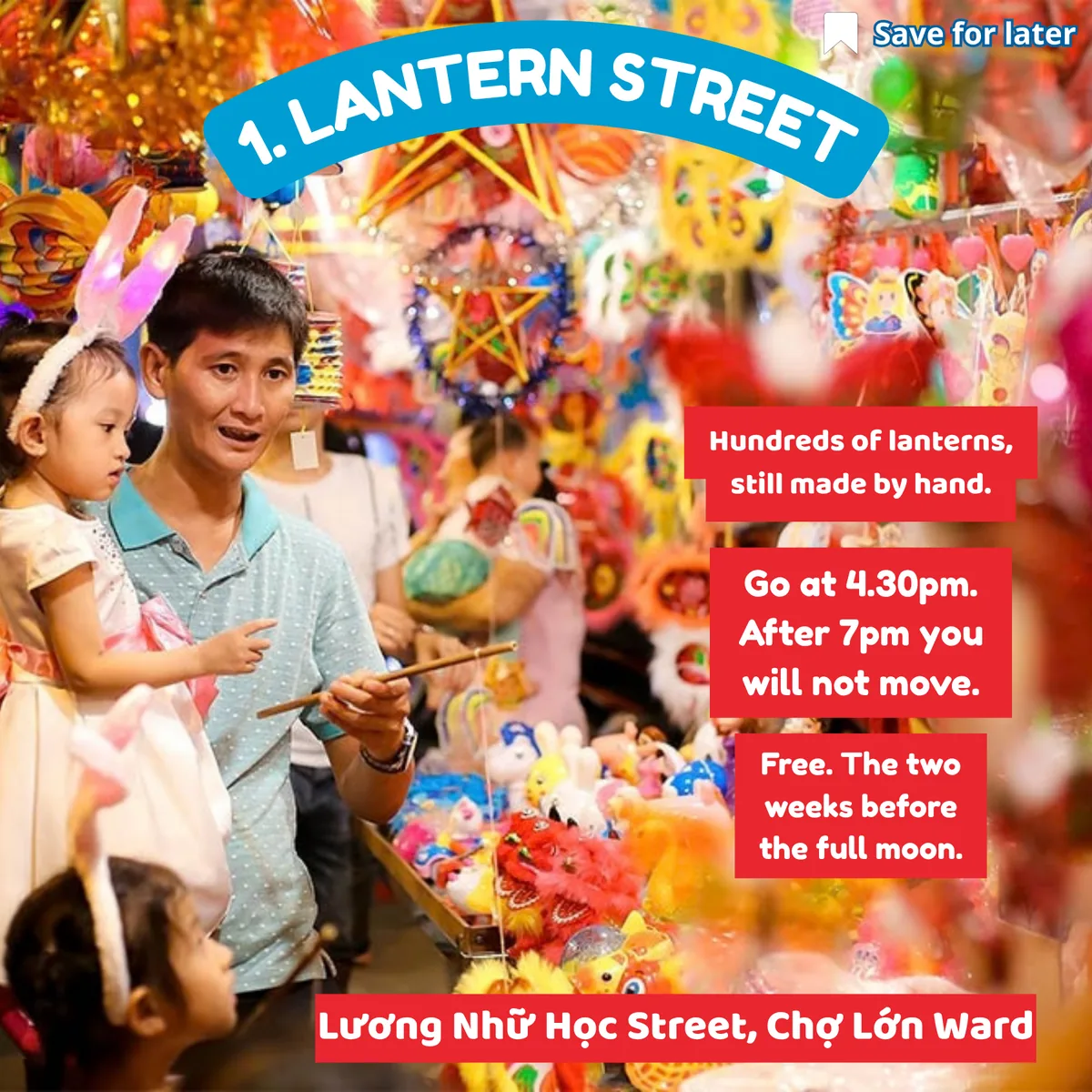
This is the biggest lantern street in the city. It is run by the Chinese community of the neighborhood, who make the lanterns by hand, from father to son, in the workshops on the ground floor. It lights up from the first to the fifteenth day of the eighth lunar month, which means the two weeks before the full moon.
The one piece of advice that changes everything is the time of day. Between 7pm and 9pm the crowd is impossible, the streets are blocked and the parking lots triple their prices. With young children, come between 4:30pm and 5:30pm instead: the light is still good, the lanterns are already on, and you can still walk down the street. After 10pm works too.
Where to park: the Hùng Vương Plaza shopping mall, 126 Hồng Bàng Street, Chợ Lớn ward, about 800 meters away, between 5,000₫ and 10,000₫ and guarded. Or the University of Medicine and Pharmacy hospital, 215 Hồng Bàng Street, Chợ Lớn ward, about 600 meters away, 5,000₫. Avoid the improvised parking spots at the start of Nguyễn Trãi Street, which ask for 20,000₫ to 50,000₫.
Sources: VOH, how to visit the lantern street without the crowd (in Vietnamese) and Xanh SM, the Lương Nhữ Học lantern street (in Vietnamese).
2. The Bà Thiên Hậu temple and the mooncake ovens
710 Nguyễn Trãi Street, Chợ Lớn ward. Free entry, from 6:30am to 4:30pm.
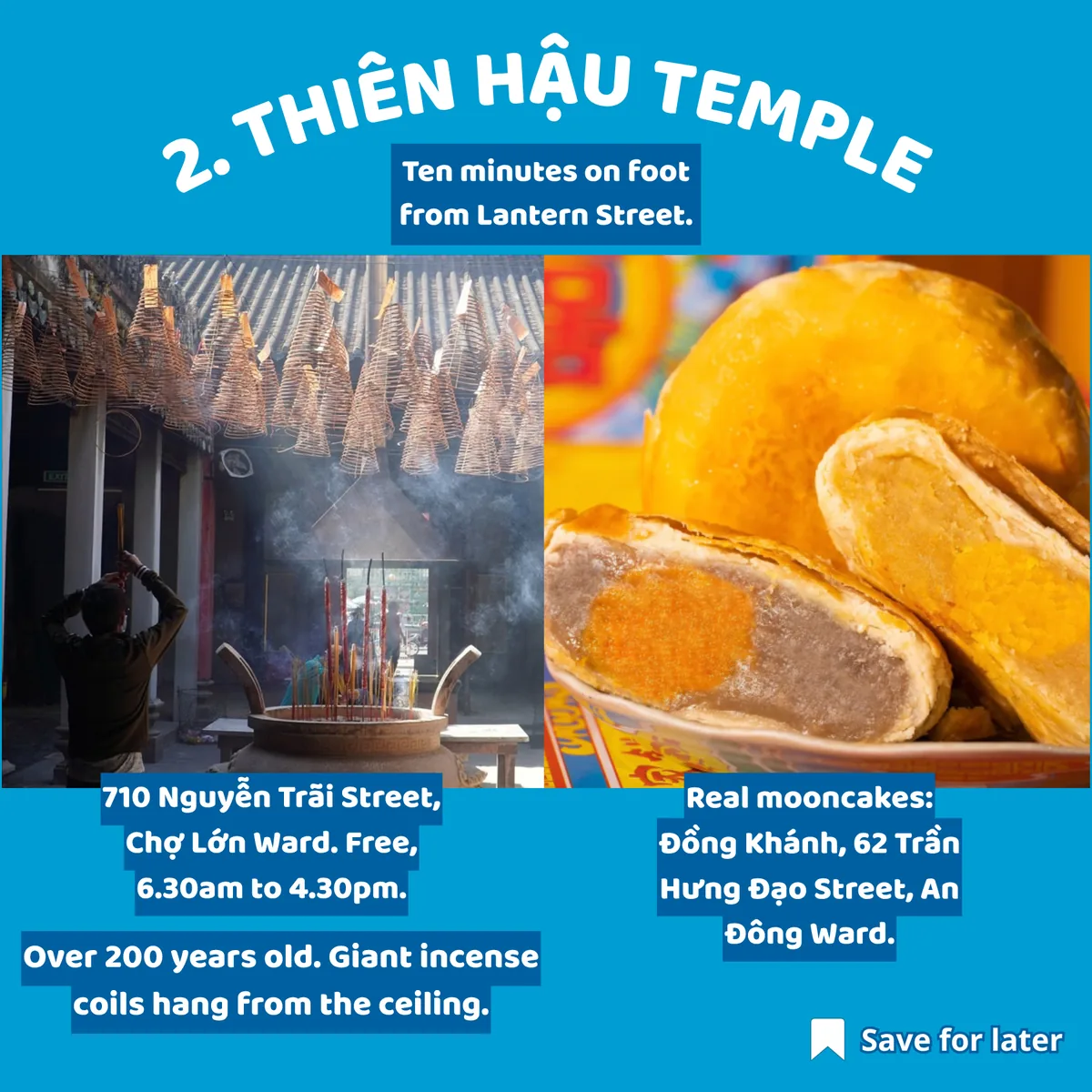
The temple is a five or ten minute walk from the lantern street: it is the same outing, and that is what makes the half-day easy. Also called Hội quán Tuệ Thành, it was built at the end of the eighteenth century by merchants from Canton, and it is one of the oldest Chinese temples in the city. The large incense spirals hanging from the ceiling leave a lasting impression on children.
In the same neighborhood, the old-style mooncake makers light their coal ovens again during the season: Triệu Minh Hiệp, almost eighty years old, takes its first batches out around 9am; Quảng Nguyên Long, about sixty-five years old, works to order only; Đồng Ký, more than thirty years old, opens only during the seventh and eighth lunar months.
For an address that is easy to find, two houses that everyone knows here: Đồng Khánh, 62 Trần Hưng Đạo Street, An Đông ward, seventy-five years in business; and Như Lan, 50 Hàm Nghi Street, Sài Gòn ward, founded in 1968.
A word about the cakes: the salted egg yolk in the middle stands for the full moon. Many children do not like it the first time, and that is normal. Buy one, cut it into four, and taste it together.
Sources: Tuổi Trẻ, the mooncake ovens of Chợ Lớn (in Vietnamese) and the entry on Hội quán Tuệ Thành (in Vietnamese).
3. Water puppets, and the zoo right next door
Museum of History, 2 Nguyễn Bỉnh Khiêm Street, Sài Gòn ward.
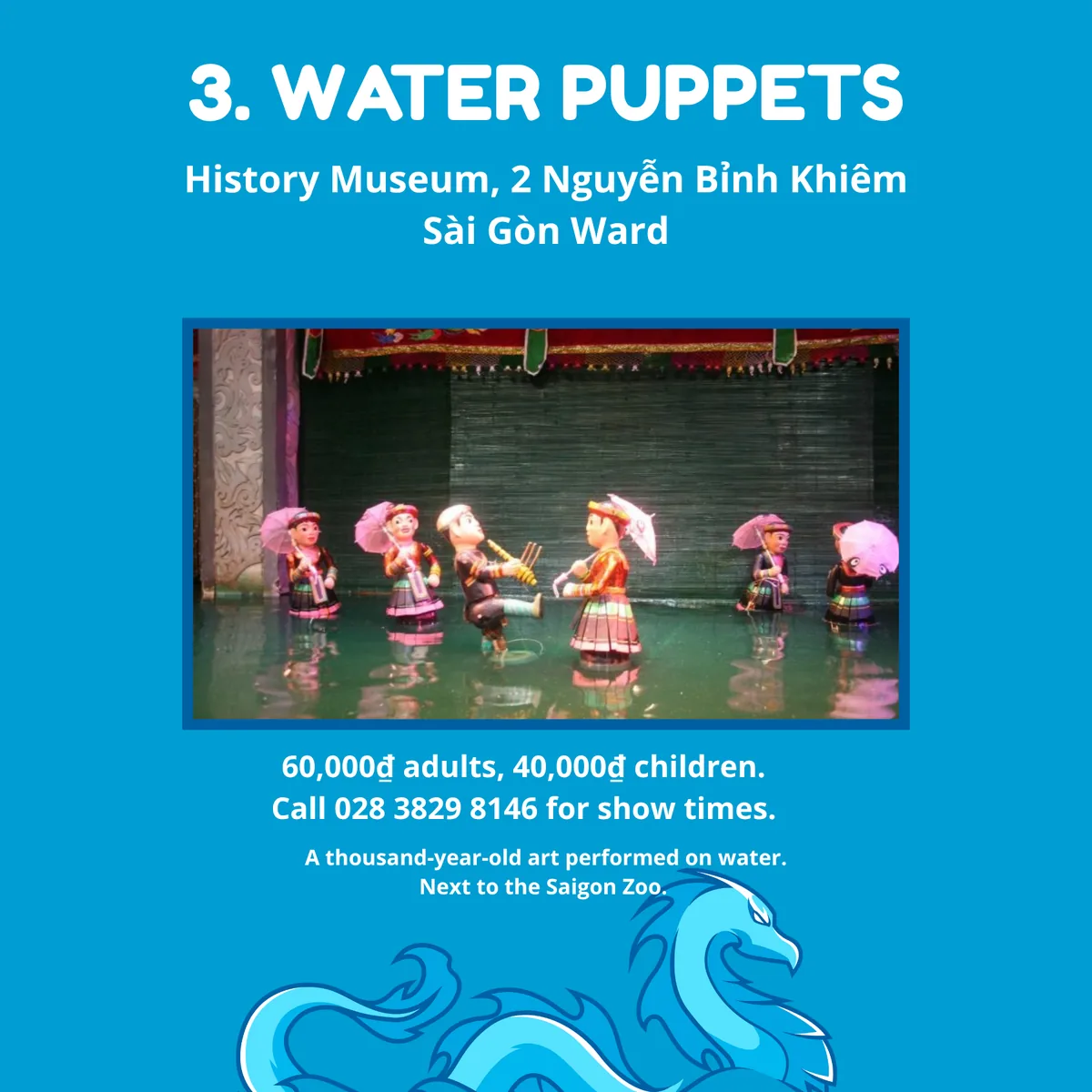
Inside its grounds, the museum has a water puppet theater, run by a troupe from the city arts center, with a program that changes every month. It is a folk art a thousand years old, born in the flooded rice fields of the north of the country, and it is the easiest show to follow for a child who does not speak the language yet: everything goes through pictures, water and music.
Right next door is Thảo Cầm Viên, the Saigon zoo and botanical garden, one of the oldest still open in the world: 60,000₫ for an adult, 40,000₫ for a child. The half-day takes care of itself.
Show times and ticket prices change from one month to the next: call 028 3829 8146 or 028 3823 4582 before you make the trip.
Sources: the Museum of History announcement about the water puppets (in Vietnamese) and Mực Tím, a visit to the museum theater (in Vietnamese).
4. The city Children’s House
Nhà Thiếu nhi Thành phố, 169 Nam Kỳ Khởi Nghĩa Street, Xuân Hòa ward.
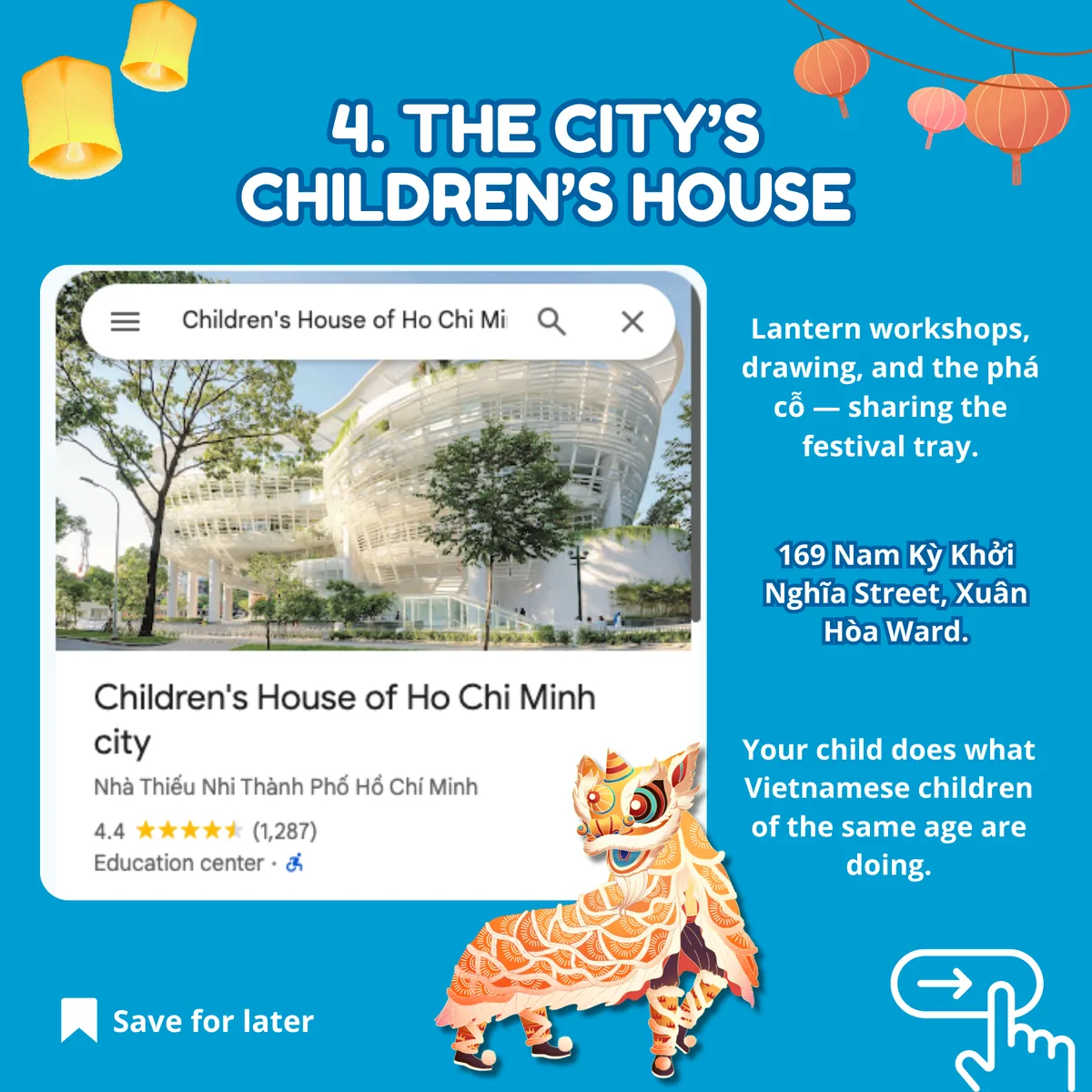
Two hectares in the middle of downtown, and a public institution of the city. Every year for the Mid-Autumn Festival, the Children’s House puts on lantern-making workshops, drawing, stage performances, and a sharing of the festive tray, the phá cỗ.
This is the place where a foreign child ends up doing exactly the same thing as the Vietnamese children of the same age, sitting at the same table. Nobody needs to speak the language: the hands do the work. That is precisely what a parent who has just arrived is looking for, and it is very hard to find anywhere else.
The Mid-Autumn program is announced a few weeks in advance: check the website before you come.
Source: the Nhà Thiếu nhi TP.HCM website (in Vietnamese).
5. The big free festival of Phú Mỹ Hưng
P2 Park, Trần Văn Trà Street, Phú Mỹ Hưng, Tân Hưng ward. Completely free, open to all.
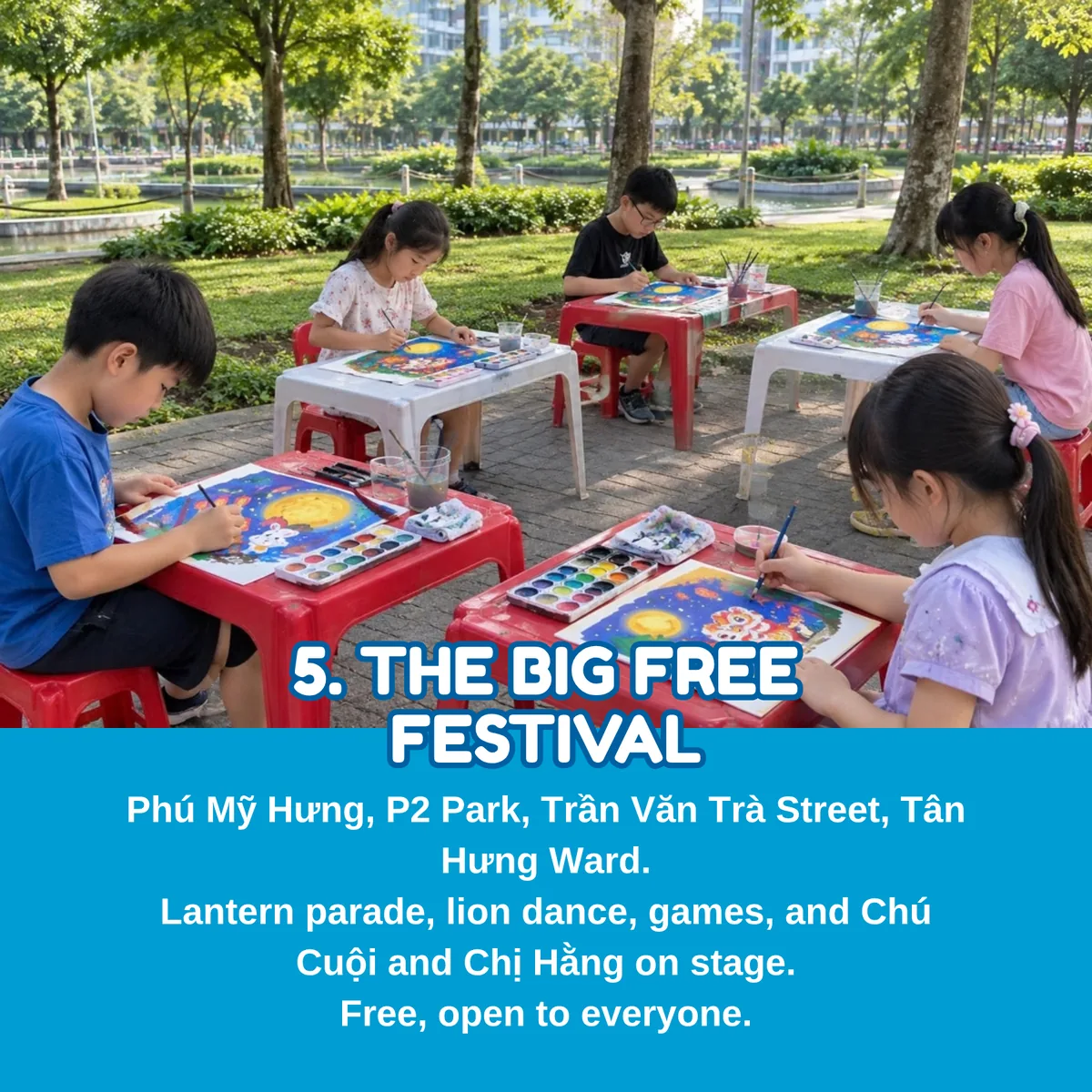
This is the biggest public Mid-Autumn festival in the city for families, and it comes back every year, on the Saturday before the full moon. In 2026, it was on September 19, from 2pm to 9pm.
On the program: a lantern parade, the sharing of the festive tray, craft workshops, drawing, traditional games, two competitions for children — the star lantern and the drawing — and a stage show led by the characters Chú Cuội and Chị Hằng, with múa lân, singing, magic and theater. About two thousand gifts are handed out.
It is also the neighborhood where many foreign families live, so a place where a newcomer will feel at ease right away. Put it in your calendar now for next year: the date is announced at the beginning of September.
Sources: VnExpress, the Phú Mỹ Hưng Mid-Autumn festival (in Vietnamese) and Tuổi Trẻ, the detailed program (in Vietnamese).
And at school, what do we do with it?
At the French International School Boule & Billes, the Mid-Autumn Festival is not taught: it is lived.
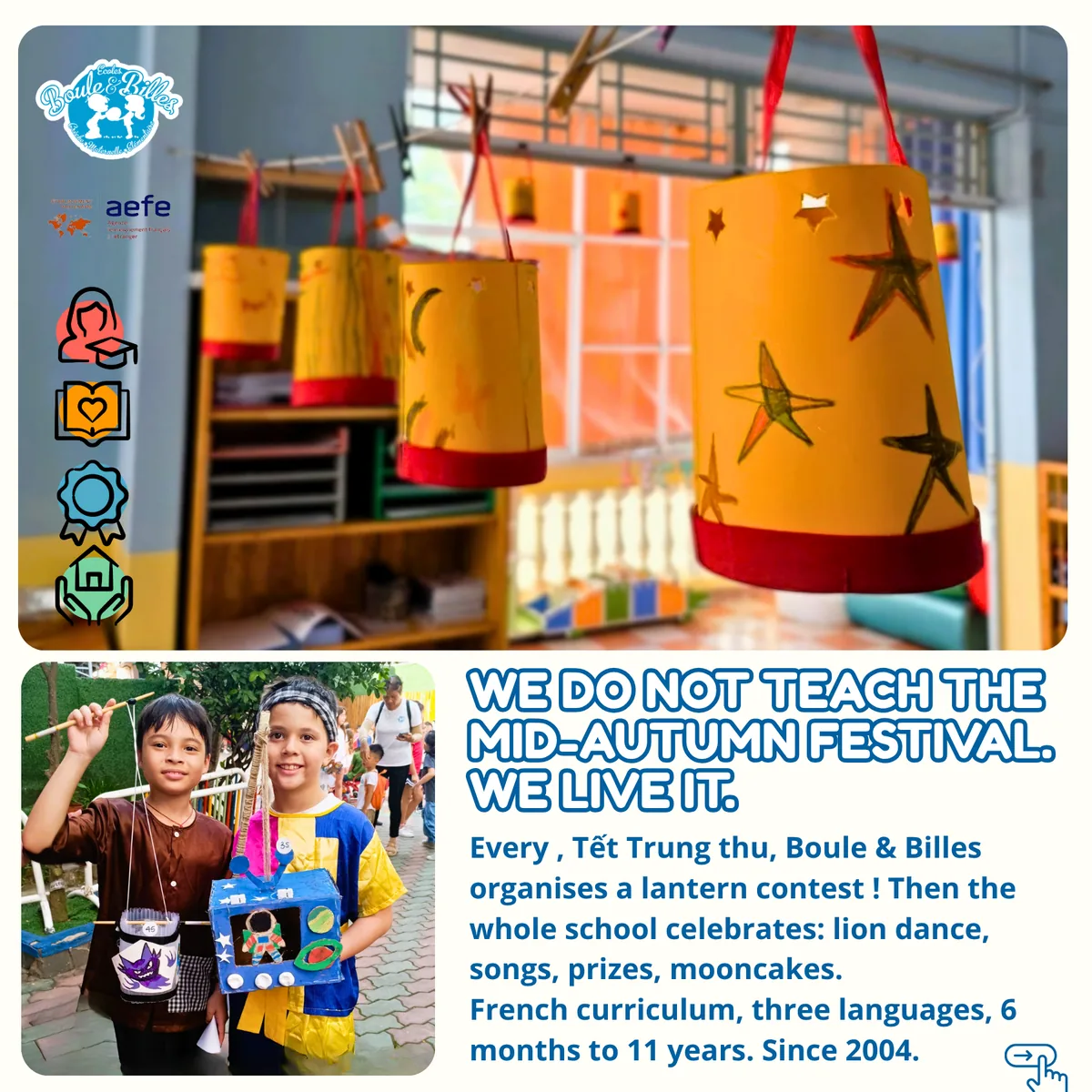
Every September, the children make a lantern at home, with their parents, using recycled materials only — bottles, boxes, paper. The lanterns are put on display, a panel of judges goes around, and the winners receive their certificate. Then the whole school meets in the courtyard: a real múa lân troupe, songs, mooncakes, and the youngest ones in áo dài discovering the drum.
Our pupils follow the French national curriculum, in three languages, from 6 months to 11 years old, on our two campuses in Thảo Điền and Bình Thạnh. And they grow up in Vietnam for real.

If you are preparing your move to Ho Chi Minh City, or if you have just arrived, come and see us on an ordinary day, with nothing prepared: book your school visit.
Happy Tết Trung Thu to your children.